
How Austin’s Skyline Transformed Into Texas’ Tallest in Just 25 Years
A wave of high-rise condos, tech offices and mixed-use towers transformed downtown and reshaped Austin’s skyline
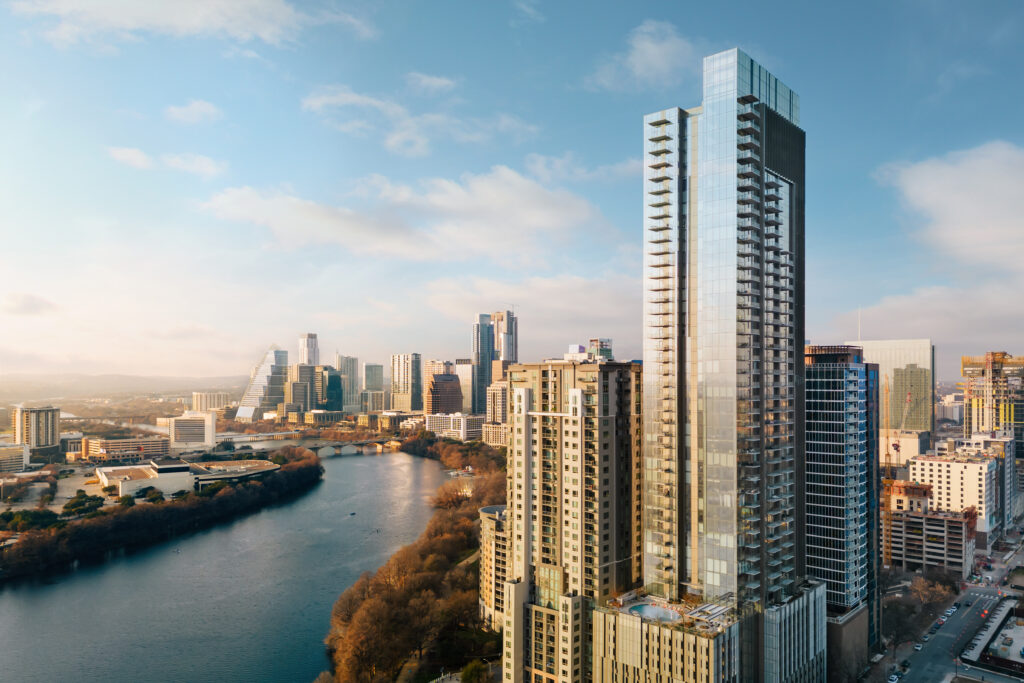
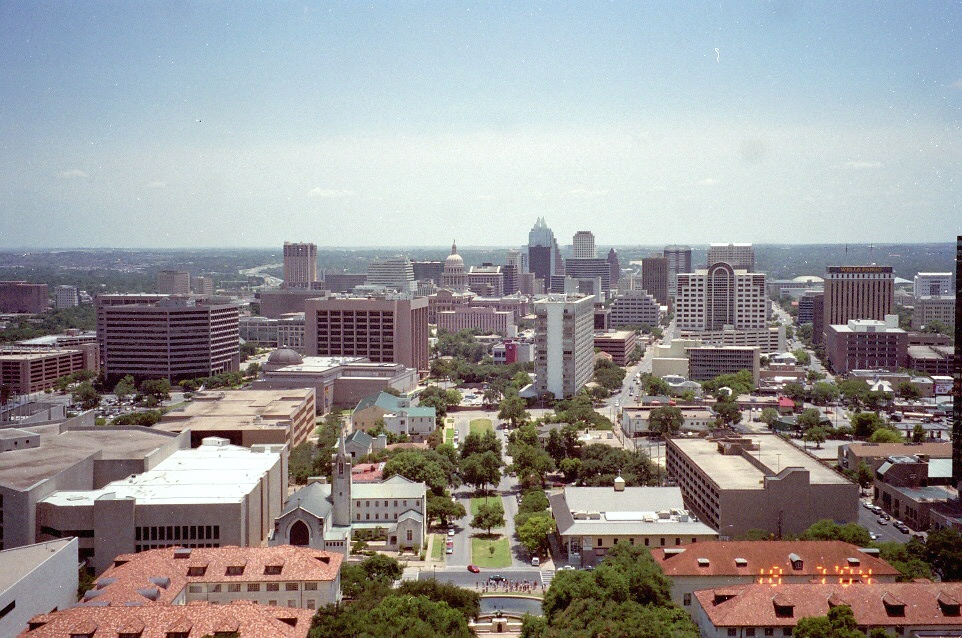
Twenty-five years can change everything. When the millennium turned, Austin’s skyline reflected its identity: a college town with a few notable buildings like the UT Tower and 100 Congress, content to sprawl outward rather than climb upward. However, as time progressed and the population grew, Austin’s skyline shot expansively into the sky, now home to the tallest building in Texas.
The transformation began in earnest with the Frost Tower, which broke ground in 2001 and opened in 2004 as the first post-9/11 high-rise at 33 stories. “In Austin, it was also the aftermath of the dot-com technology bust,” says Bill Day, senior vice president of corporate communication at Frost Bank. “Constructing the new Frost Tower was a sign of long-term optimism for the city.”
The first wave of towers
Day explains that the design was intentional: “We wanted our tower in Austin to be a landmark too, and we wanted it to reflect our future as well as our long past. We worked with architects on a unique design that would represent stability, but also a dynamism and energy for what comes in the next century and beyond. The glass structure at the top is meant, in part, to represent a flower blooming from the aftermath of the dot-com crash.”
The shift accelerated around 2010. The Spring Condos, Gables Park Tower and The Bowie sprung up within a few years, signaling Austin’s growing appetite for vertical living. The Austonian — completed in 2010 — became the tallest building in the city and the anchor of the emerging Second Street District. That same year, the 36-story W Hotel added another signature silhouette to the skyline, cementing the area as downtown’s new center of gravity.
“I think the biggest thing that has changed from when Urbanspace started (in 2000) is that, a high-rise condo would’ve been considered 10 stories,” says Kevin Burns, CEO of Urbanspace Design Studio. “The Towers at Town Lake was 13 stories, the Austin City Loft was 14 and Cambridge Towers was 15. Then we got 30 and 40-story buildings and the Austonian at 56. It was the tallest residential building west of the Mississippi and set the path for taller, grander buildings in Austin.”
Austin’s tech boom and tower boom
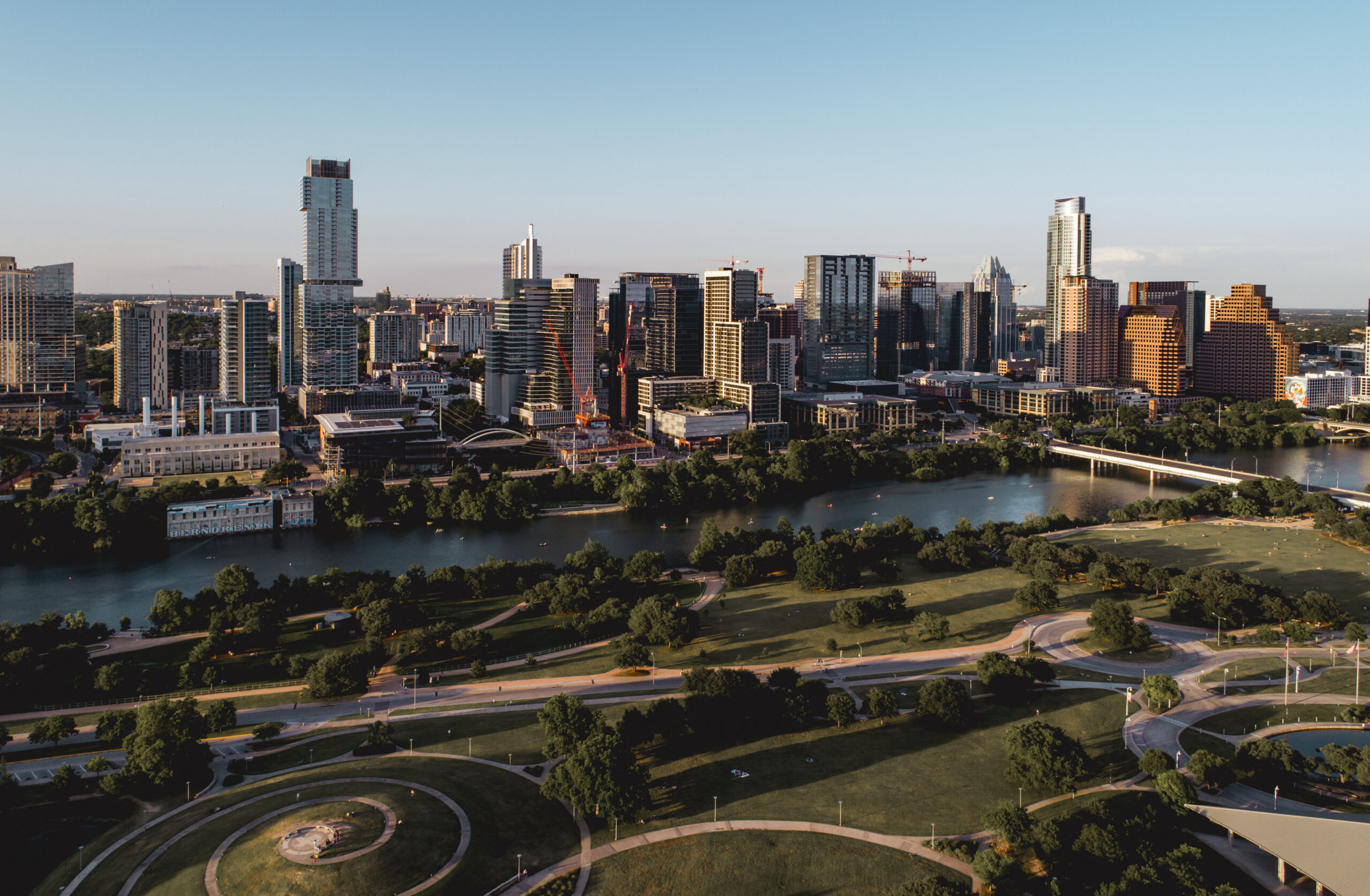
The Independent rose in 2019 to 58 stories, built just 2-feet taller than the Austonian. The city’s emergence as a tech hub became visible in the skyline with the 35-story Google building in 2022, and the Indeed Tower at 56 stories in 2021.
The most dramatic changes have come in recent years. Rainey Street has evolved from a bar scene into a luxury residential hub with 44 East (50 stories), Paseo (48 stories) and The Travis (50 stories) reshaping the neighborhood in 2023 and 2024. Sixth and Guadalupe arrived in 2023 as a 66-floor multifunctional blend of hotel, retail and office space — currently the tallest completed building in the city. In 2025, The Modern added 56 floors to the skyline.
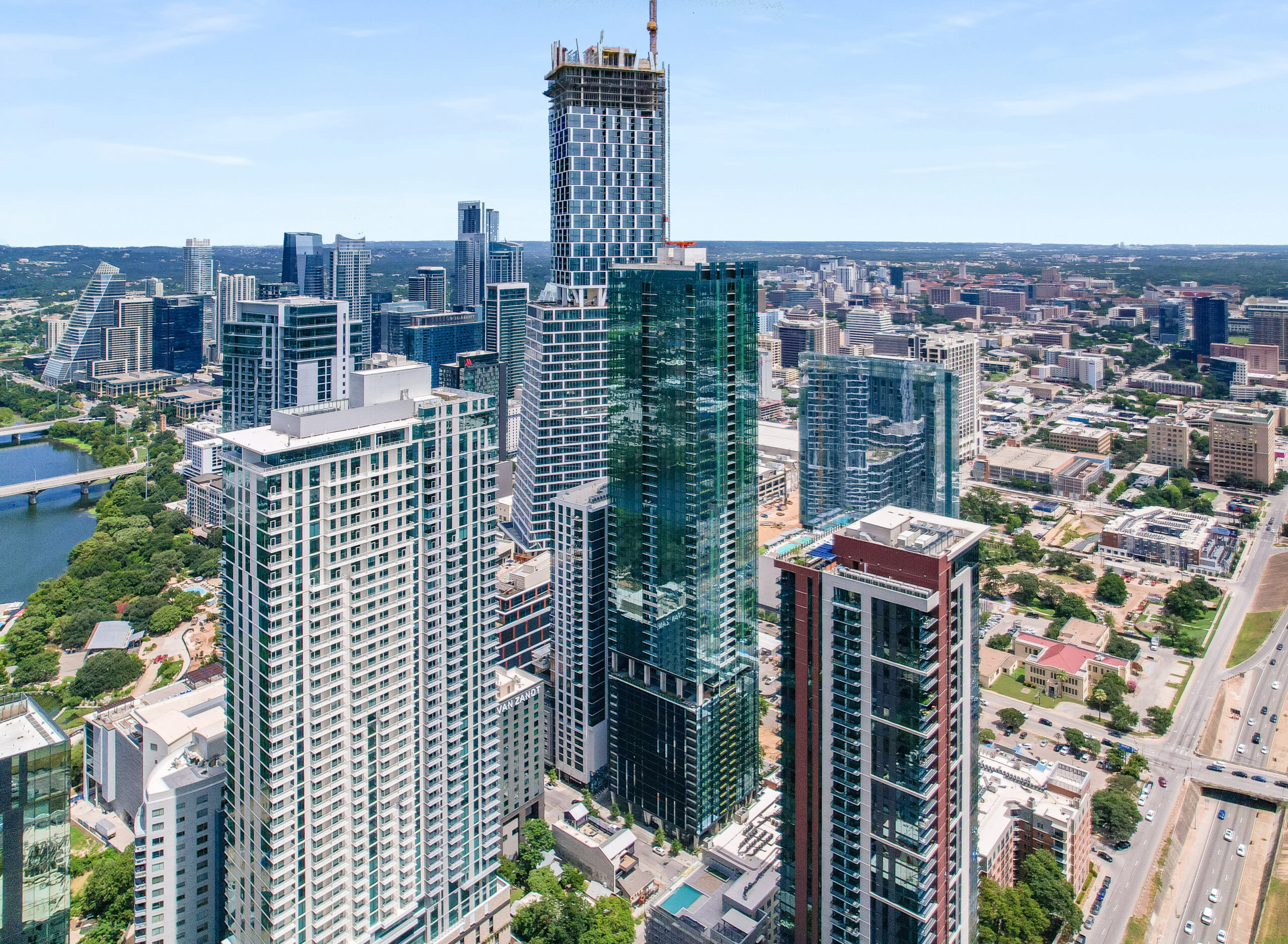
Now a new building is soaring even taller than the rest. Waterline, a mix-use development currently still under construction, claims the title of the tallest building in Texas. “Waterline and 44 East are both about creating distinct landmarks that respond to their site and context,” explains Michael Hsu, FAIA, IIDA and founder and principal of Michael Hsu Office of Architecture. Hsu’s firm designed the common spaces at 44 East, and is currently designing the interiors at Waterline. “44 East connects directly to Lady Bird Lake; it’s about privately celebrating the waterfront and the green fringe that borders downtown.” Hsu says. “Waterline is also about connecting downtown to the natural relief of our creeks and green spaces. However, it’s a very integrated mix of uses, creating a neighborhood within the city.”
Building within boundaries
Economic pressures have contributed to reshaping the skyline. “Most recently, land has become so expensive that you have to stack usages on top of each other,” Burns notes. “You have a lot of buildings that are offices, plus retail and plus apartments for lease. We are seeing this densification and vertical growth in downtown.”
Yet, Austin faces unique constraints that shape where and how tall buildings can rise. Downtown’s grid was laid out in 1839 with the “Waller Plan,” a 20-block-by-20-block framework that never anticipated towers of this scale. The Rainey Street Historic District, now home to some of the city’s tallest residential buildings, wasn’t even part of the original downtown grid; it was a single-family neighborhood on what was previously land owned by cattle baron Jesse Driskill.
“We are also challenged because there are only so many spots you can build on,” Burns explains.
Natural and institutional boundaries further limit development. The University of Texas sits to the north, Interstate 35 to the east, Old West Austin Historic District and Lamar Boulevard to the west and Lady Bird Lake to the south. Add to that the Capitol View Corridors — which protect sight lines to the Texas State Capitol — along with federally designated sites, UT properties and historic preservation zones.
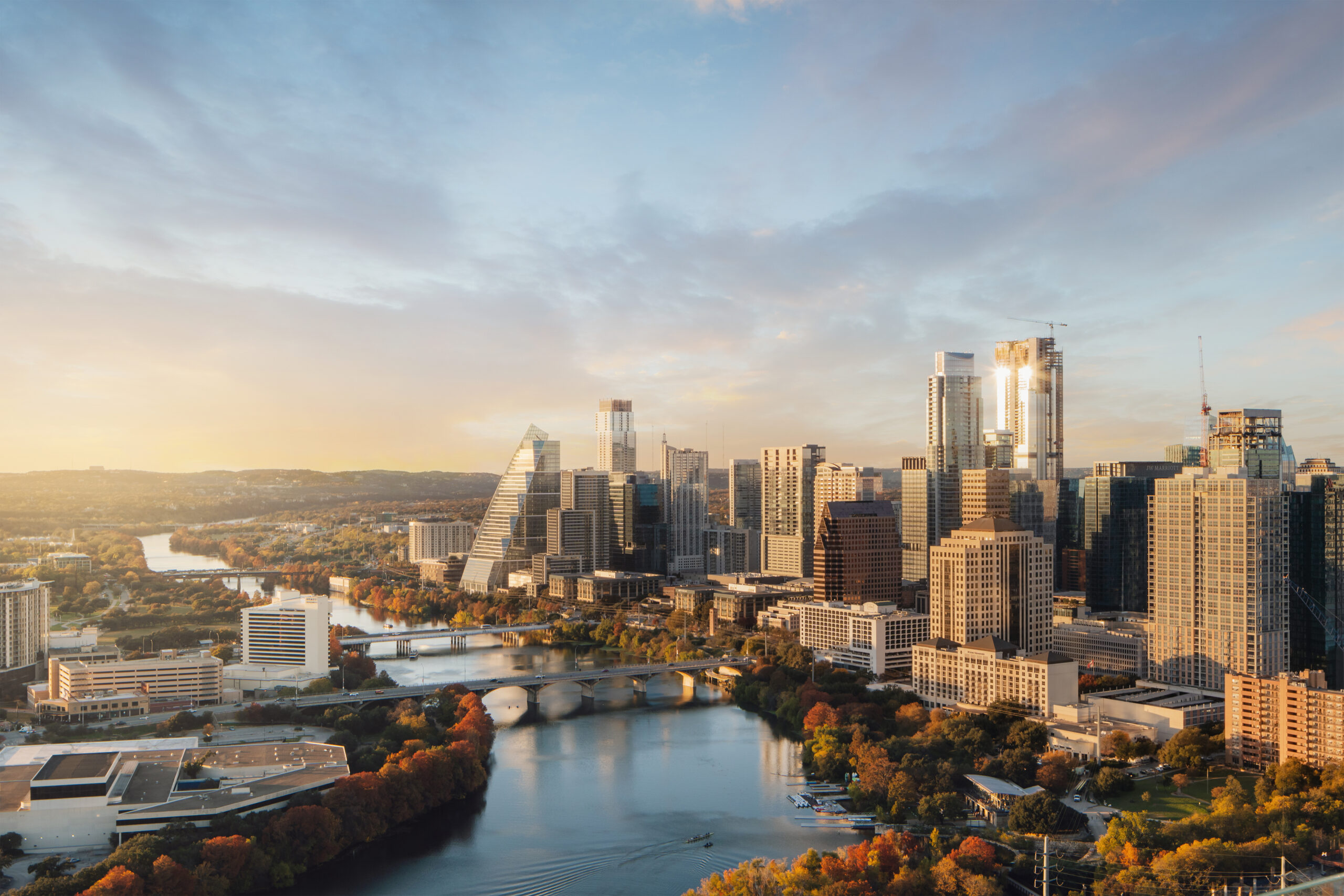
Looking up at Austin’s skyline
Despite these constraints, the city continues to foster a strong culture of innovation. “The design and architecture scene is incredibly vibrant right now — there’s a lot of innovation, but also a desire to respect the city’s character,” Hsu says. “There’s a growing emphasis on large buildings having a civic and public presence, proving they can be more than just for their everyday users.”
Looking ahead, future towers will likely prioritize more than just height. Hsu expects “more integration of green space, designed‑in wellness and flexibility for future uses. The most successful towers will function as small ecosystems, rather than isolated objects.”
“Although not everyone loves seeing tall buildings, since they challenge Austin’s image as an outsized town, I see them as a sign of vibrancy and a more sustainable approach to growth if growth is unavoidable,” Hsu concludes. “They continue the long narrative of what Austin is: a place of, and for, change.”
Austin’s skyline tells that story now in glass and steel, where cranes still dot the horizon, and the only certainty is that Austin will continue to reach upward.
RELATED: A New Hotel Continues the Legacy of South Austin’s Green Pastures