
Meet This Creative Family Behind Austin’s Music, Film and Fashion Scene
Black Pumas’ Adrian Quesada, Resound Presents' Graham Williams, Cine Las Americas' Celeste Quesada and Prototype Vintage's Audrie San Miguel on collaboration, community and keeping a seat at the table for the next generation
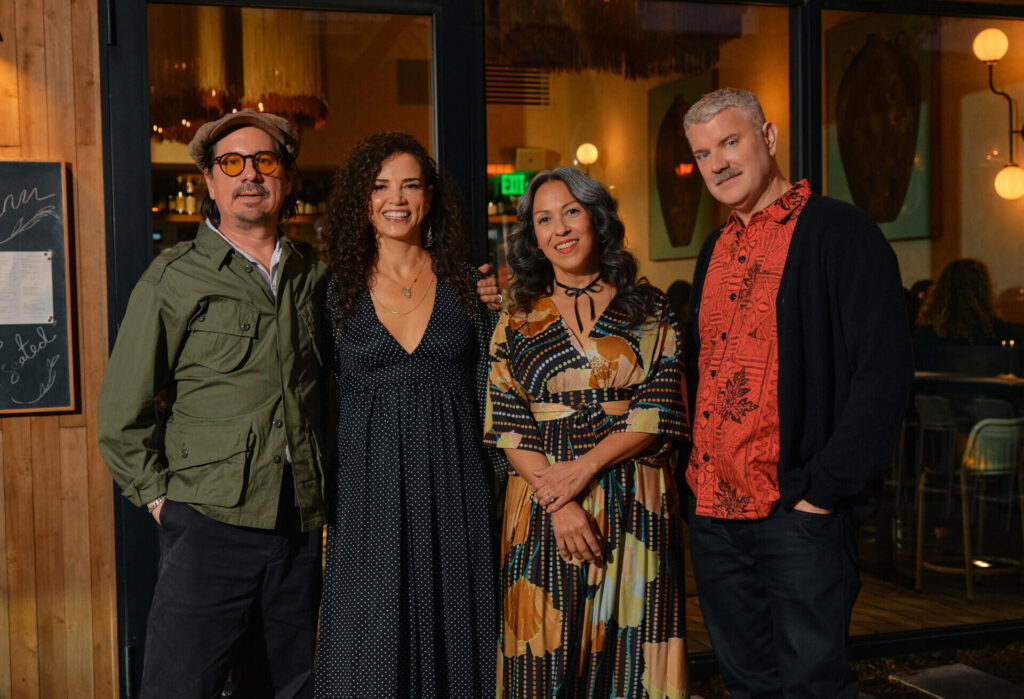
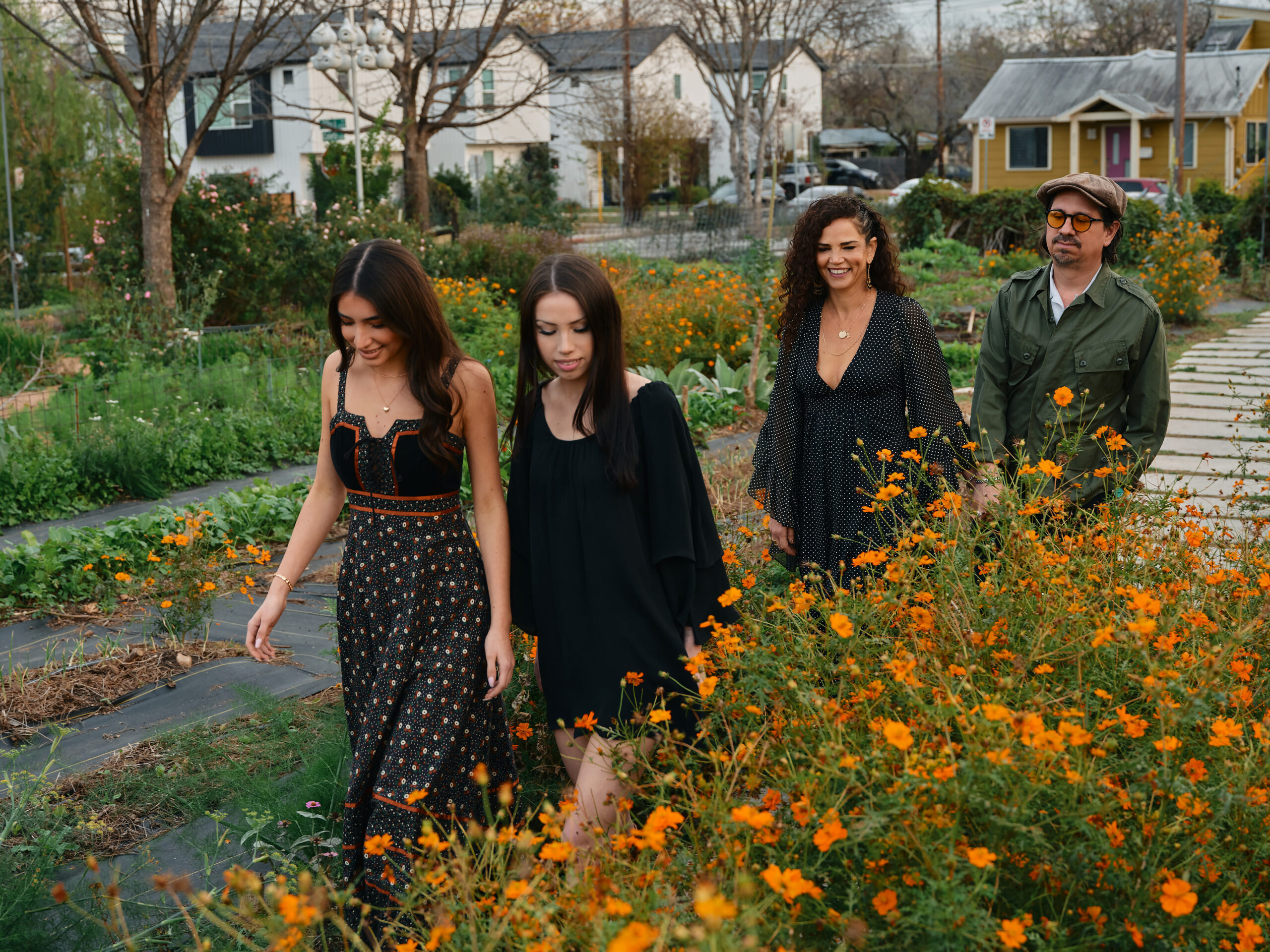
For decades, Celeste and Adrian Quesada, Audrie San Miguel and Graham Williams have been pioneering Austin’s creative landscape, not only as collaborators but also as family. When they gather for a meal, they’re laughing over shared memories of their early days in the city’s creative trenches and swapping stories about half-formed ideas that became defining moments in Austin’s cultural scene, all while making sure there’s still a place at the table for this city’s next generation of artists.
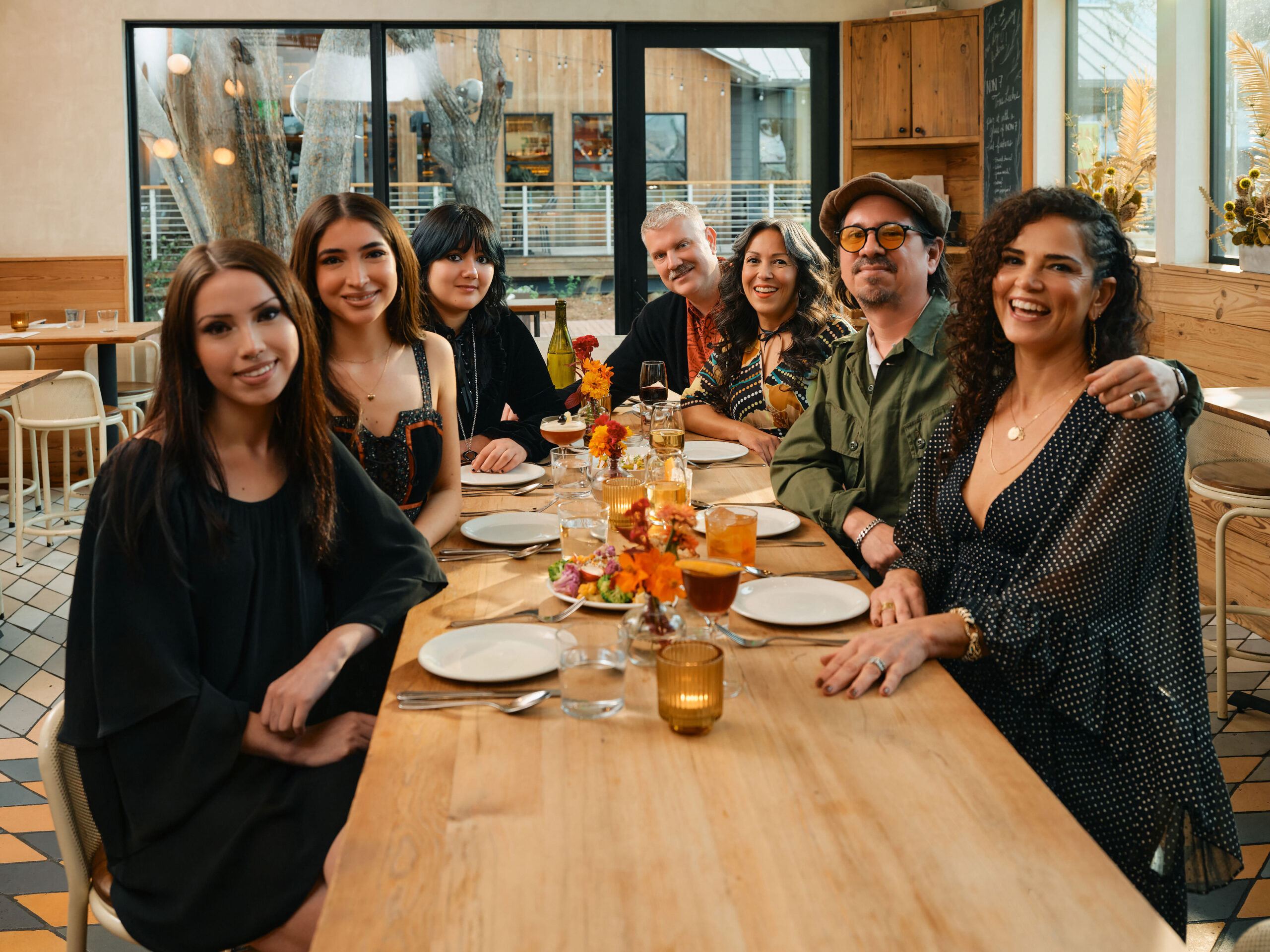
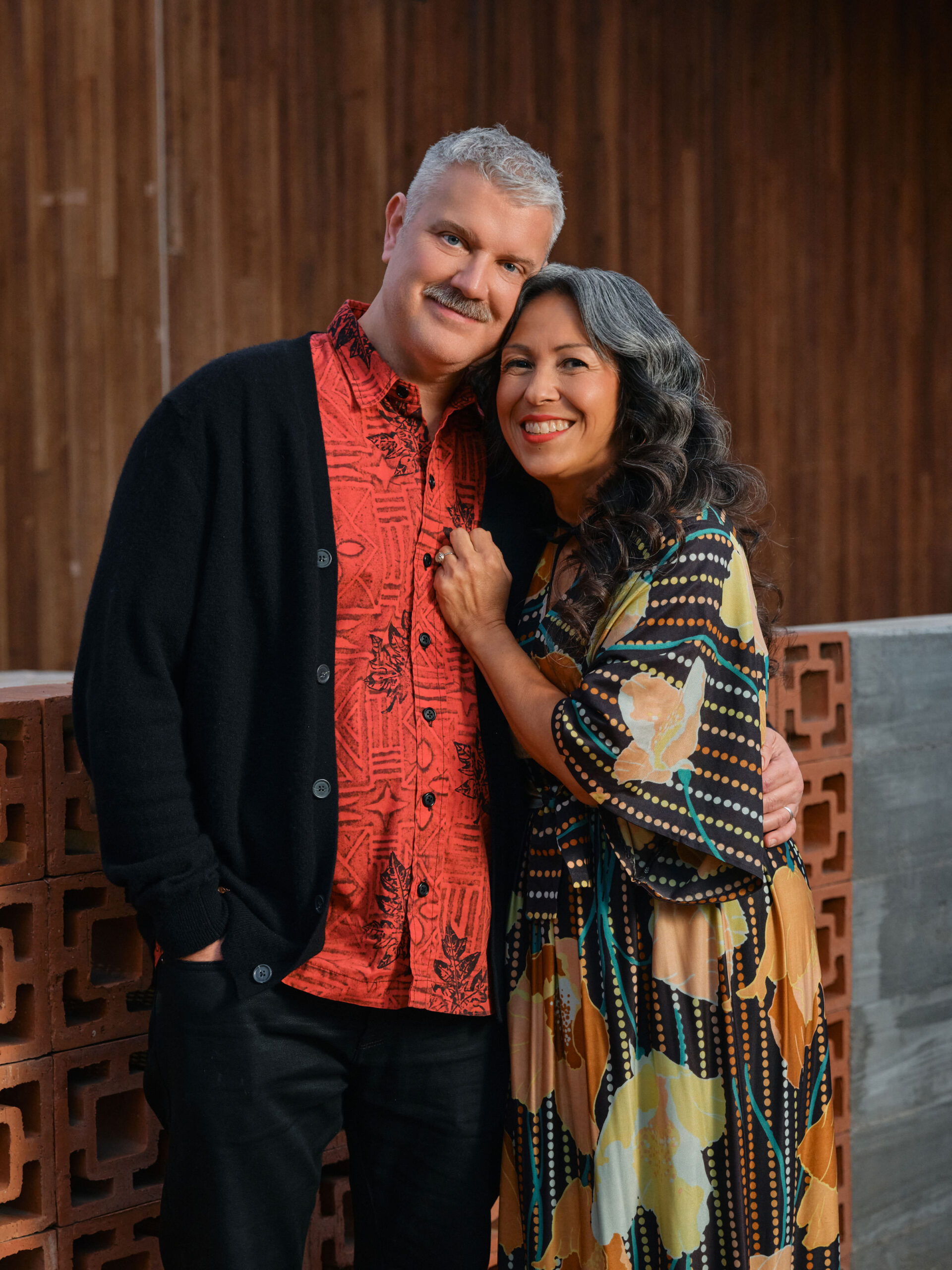
Their family tree is deeply woven into the fabric of Austin’s spirited, artistic culture. Adrian Quesada, an Oscar-nominated, Grammy-winning musician, producer and co-founder of the Black Pumas (among many other renowned music groups), is married to Celeste Quesada, an award-winning producer and creative director who co-founded Cine Las Americas and has spent decades shaping Austin’s film community while also helping artists navigate housing as a real estate agent. Her brother, Graham Williams, CEO of Resound Presents, books hundreds of live shows as well as LEVITATION, and is the visionary behind the much-mourned Fun Fun Fun Fest. Williams is married to Audrie San Miguel, who founded Prototype Vintage and is also now the new owner of Room Service Vintage.
The family is first to say their success didn’t happen alone. Long before the awards, businesses and national recognition, they were inspired by the old Austin spirit that encouraged young artists to create, backed by a tight-knit community and family that lifted them up.
“We all come from backgrounds where we were so lucky for people to hold the door open for us in different ways,” Celeste Quesada says. “I think all four of us in our own way continue to hold the door open for others.”
A constellation of mentors, family members and their Mexican-American heritage has shaped their exposure to music, film, art and the culture native to Austin. From that foundation grew a lasting commitment to nourishing their community and giving back.
“Our family values are rooted in social justice and helping underserved communities, whether that’s indie rock, Latino issues, immigrant issues or slow fashion,” Celeste Quesada continues. “We put community first and don’t compromise our values for money. That entrepreneurial, indie spirit is part of Austin, and it’s helped shape our value system as a family.”
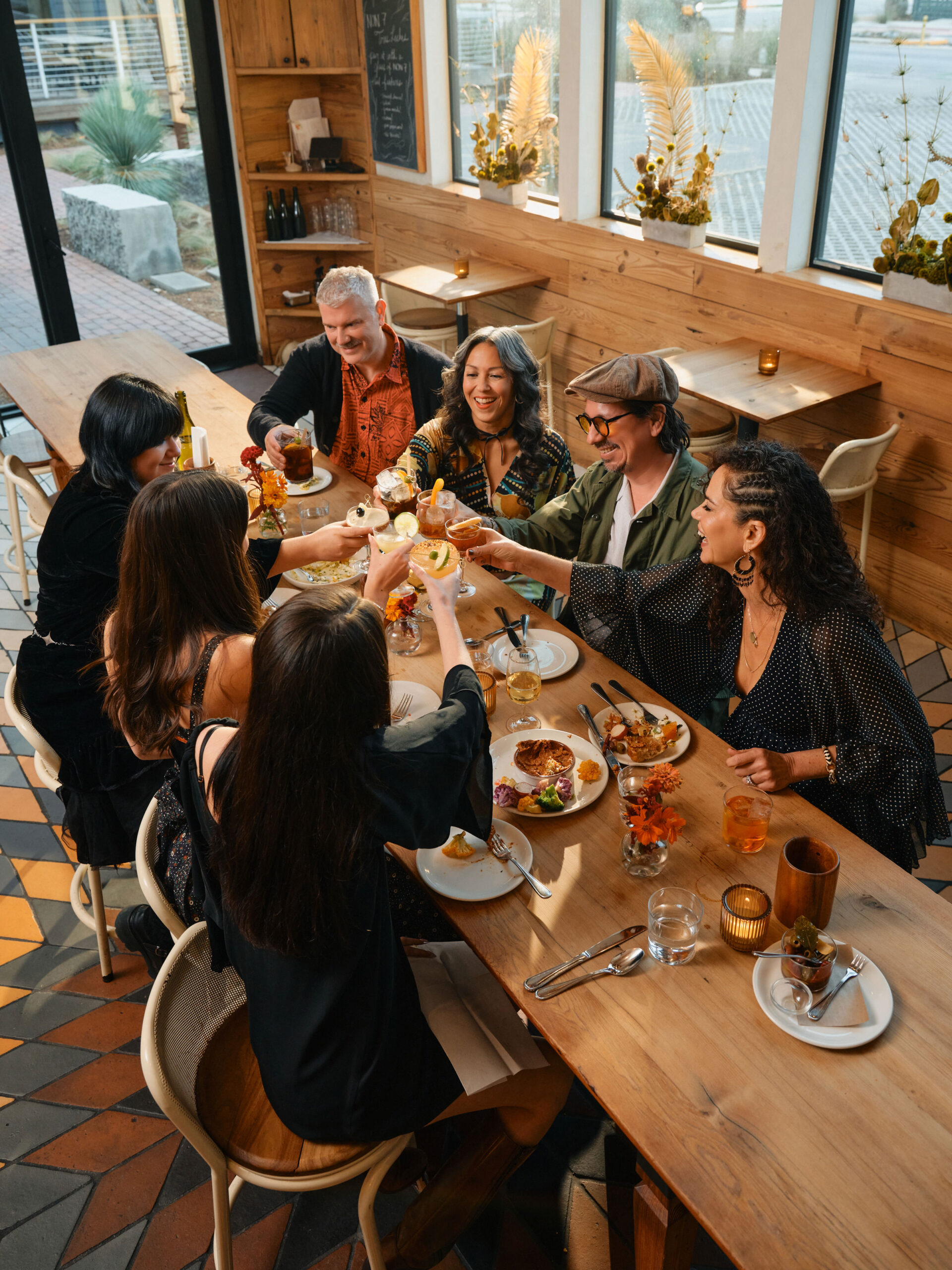
Shared family values
“We come from a legacy of givers,” Celeste Quesada says, “and that is a big focus and priority of ours.”
Their artistic talents aren’t their only shared traits — their commitment to helping others has been passed down from generations of family devoted to service and advocacy. “Community service and social services were deeply ingrained in us from a young age,” Celeste Quesada recalls. Her and Williams’ mother, born in Mexico and later immigrating to Corpus Christi, served as executive director of the Travis County Health and Human Services for Research and Planning. Their father and step-dad also worked in healthcare and social services.
San Miguel has watched that ethos in action, attributing it to fueling their creative success. “Everything that inspires each of us comes with those values. When you’re not motivated by money, all the creativity just flows out of you,” she says.
That focus — what Williams calls doing things “as a hobby first and as a business second” — has allowed creativity to flourish in Austin in ways it hasn’t elsewhere. “In some places, it gets a little bit lost because people are so focused on ‘how do I take the next step up, the next rung in the ladder?’” he says. “Austin is a bit more open, so we’re able to build and create, and because of that a lot of really interesting stuff comes out of it.”
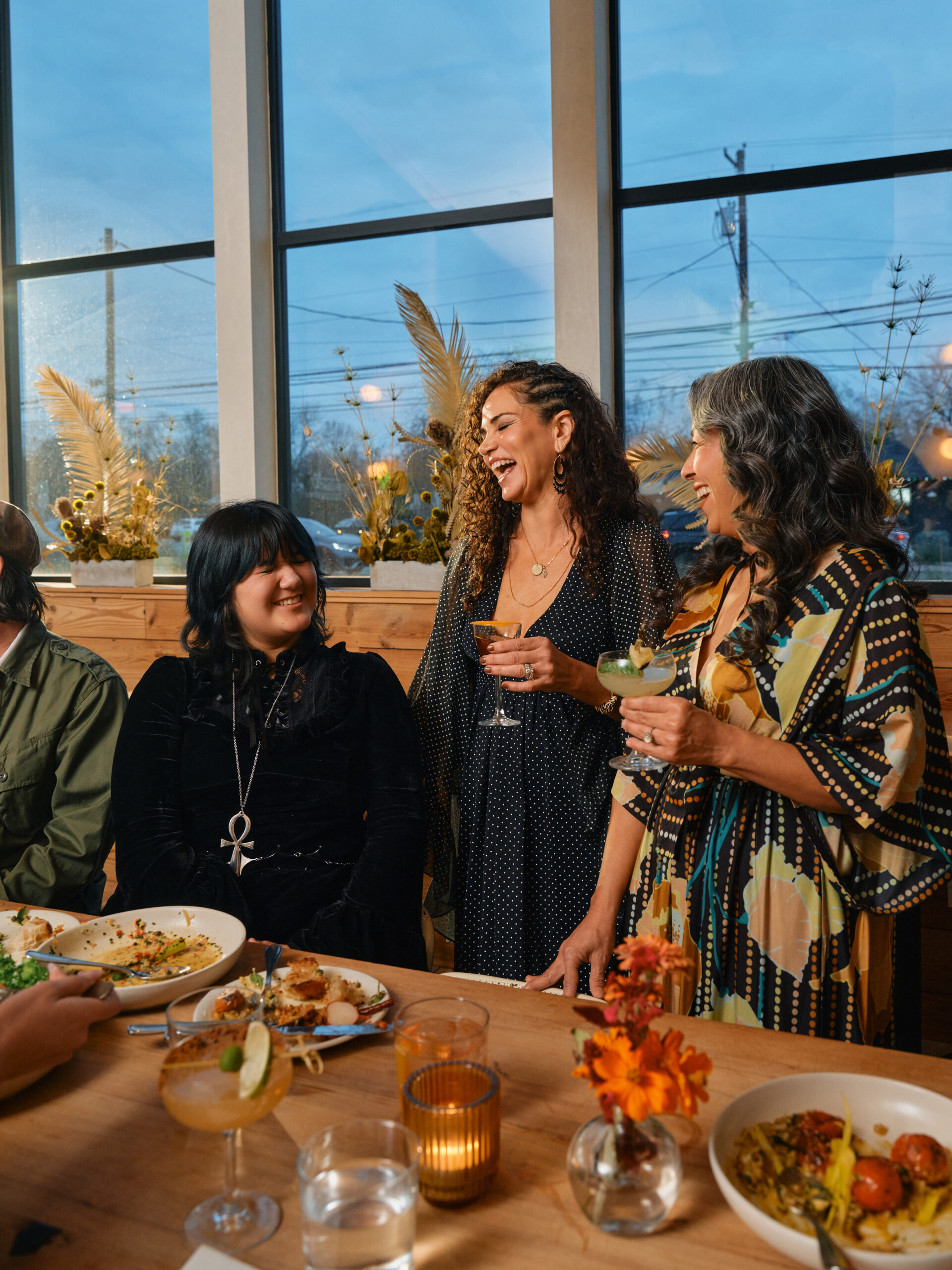
Creative kinship
Despite their varied artistic ventures, their work has overlapped organically.
“I remember our daughter’s birthday party and Graham was literally planning the first Fun Fun Fun Fest,” Adrian Quesada recalls. “It was as organic as him saying, ‘There just happens to be a bunch of bands playing this weekend, so we’re just gonna do this thing.’”
Then when the idea manifested into the first Fun Fun Fun Fest, Williams needed a cash register on opening day and his brother-in-law didn’t hesitate. “I ran to Office Depot,” Adrian Quesada remembers. “I think Audrie met me on the street and I handed (her) a cash register,” he laughs. “It turned out to be this iconic, historic part of … the coolest curated festival that influenced probably a million other ones.”
“We always have each other’s backs,” San Miguel says, and the evidence is in much of their work. When Celeste Quesada produced the Texas Film Hall of Fame Awards, she recruited San Miguel to help with decor and atmosphere. Celeste Quesada’s event production skills supported Williams’ festivals and VIP sections. Adrian Quesada’s bands — from the Blue Noise Band through Black Pumas — have played many shows booked by Williams over the decades. The Quesada’s oldest daughter, Amelie Quesada, worked her first job at her aunt’s store, Prototype Vintage.
“There have been many little tiny seeds of ideas that we’ve seen grow and be nurtured,” Celeste reflects. “The cross-pollination of ideas and support for each other is true. It’s a very true thing.”
What they’ve built
From that shared ecosystem came work that would ignite Austin’s music, production, film, fashion and festival worlds.
Adrian Quesada arrived in Austin from Laredo, Texas, drawn by a city that celebrated indie artists. “The culture that attracted me was always about the freaks and the weirdos,” he says. “Art and music here came from a left-field place, not from commercial ambition.”
His own career began with that same spirit. One of his earliest bands, Grupo Fantasma, played its first show on Nov. 3, 2000 at Empanada Parlor with five songs played twice to a small, intimate crowd. “The plan was simple,” Adrian recalls. “Hopefully our friends show up. It’s Friday night. Let’s have a party and have fun.” By 2001, the group went on to garner their first Grammy nomination, and in 2011 won Best Latin Rock, Alternative or Urban Album for “El Existential.”
In 2018, as he planned the first Black Pumas show, the approach hadn’t changed. “I literally didn’t invite anybody,” he says. “I didn’t want people to come if we sucked.” By the second show, there was a line around the block, and by 2020 the Black Pumas would go on to earn multiple Grammy nominations and win Band of the Year in the 2024 Austin Music Awards.
Now at his studio Electric Deluxe, Adrian Quesada continues building infrastructure for other artists. “The older I get, the more I feel a responsibility to show people like ourselves that you can do this too,” he says. “If I can inspire somebody from South Texas that you can come and plant your flag and do it your way in a big market like this, that’s really important to me.”
Champions for independent voices
Williams built the physical spaces where that independent spirit could thrive. Fun Fun Fun Fest, which he co-created in 2006 with James Moody, began with a simple question: “Why isn’t there a festival for people like me?” The answer became a genre-defying, community-first event that featured taco cannons, shred sleds and introduced the idea of comedians performing at music festivals. Anything that played up absurdity was celebrated, and left the city begging for its return. He also conceived Free Week in 2003, helping bridge the gap between music lovers and ticket prices. Now through Resound Presents, Williams books hundreds of shows a year, giving emerging artists their first real stages.
Celeste Quesada has spent her career amplifying underrepresented voices, beginning with nonprofit events to co-founding Cine Las Americas in 1997 to platform Latino filmmakers long before the industry took notice. For years, she produced the Texas Film Hall of Fame Awards as what she calls “sacred ceremonies.” Today, as an Austin Film Society board member, she is set to co-chair the 2026 Texas Film Awards alongside her husband.
San Miguel has been championing sustainable fashion and Austin’s independent aesthetic for more than 20 years through her South Congress store, Prototype Vintage.
“Austin is such a unique place where freedom of expression is a big part of the scene,” she says. “Austin isn’t very focused on designers. It’s more about being one-of-a-kind.”
That philosophy guided her as she took over the ownership at Room Service Vintage in August 2025. Rather than reinvent it, Audrie is focused on preserving what made the shop iconic in the first place: keeping prices affordable, the selection a curated wonder of “weird” and the spirit intact at a time when independent retail is increasingly under pressure.

Opening the door
There are new place settings at the table now for their children: Atlee San Miguel-Williams, Amelie Quesada and Marcelle Quesada, who are growing up alongside the work, watching their parents fight for Austin’s authentic, independent spirit.
“People tell us, ‘y’all are like unicorns because you grew up in Austin,’” Celeste Quesada laughs. “We’re raising baby unicorns now, and we are very much instilling these values into the next generation.”
For over two decades, they’ve not only created art that speaks to the soul of the city, but committed to preserving it for the artists coming up behind them. While Austin has changed, this family is making sure the next generation of artists will always have a seat at the table.
RELATED: Consuela Founder Conni Reed’s Formula for 20 Years of Success