
More Than 80 Works by the Haas Brothers Are Coming to the Blanton Museum of Art
“Uncanny Valley” showcases Simon and Nikolai Haas’ surreal sculptures, textiles and mixed-media works in Austin this fall
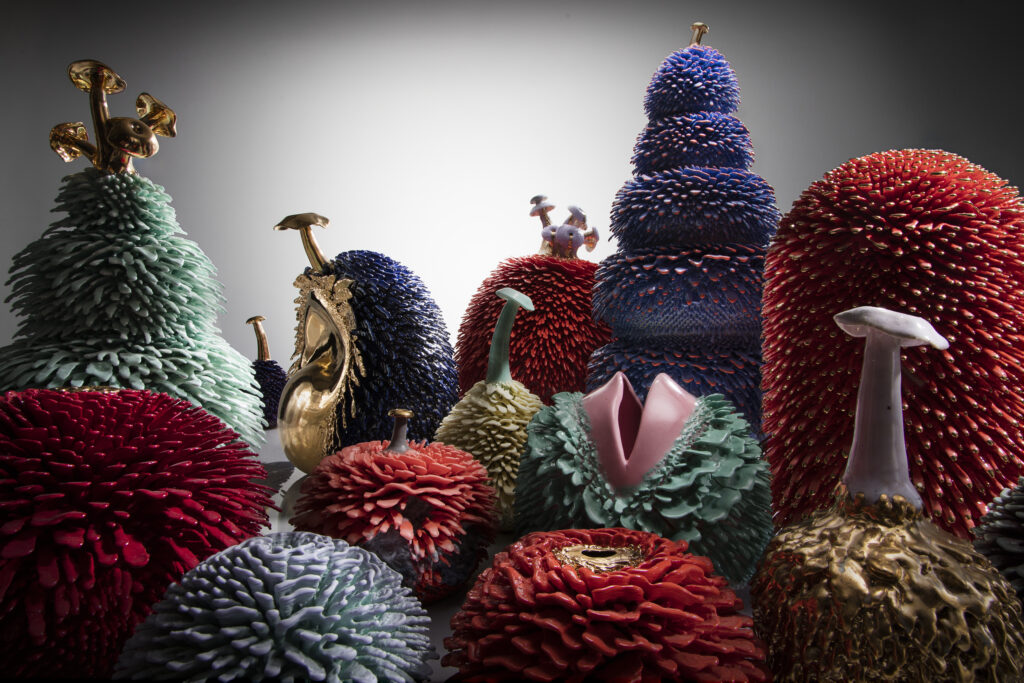
Literature and art are full of portals: time-bending tunnels and enchanted wardrobes that lead to other worlds. For the Austin-raised Haas brothers — whose inaugural mid-career survey, “Uncanny Valley,” arrives at the Blanton Museum of Art in late September — material itself becomes a looking glass, a tool that beckons viewers into a surreal realm of the artists’ own meticulous invention.
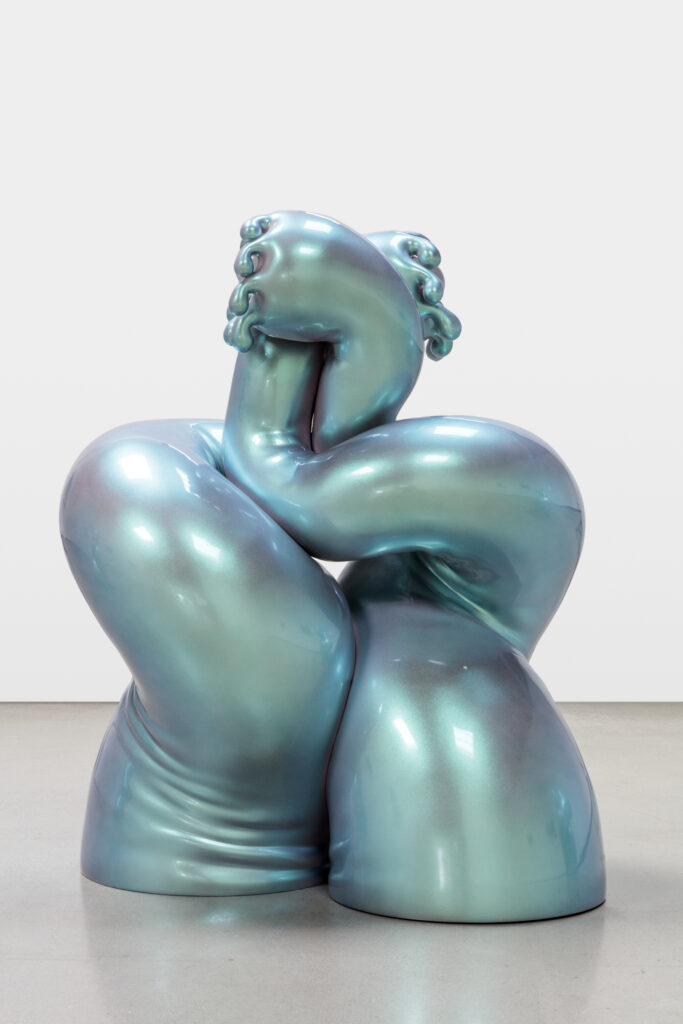
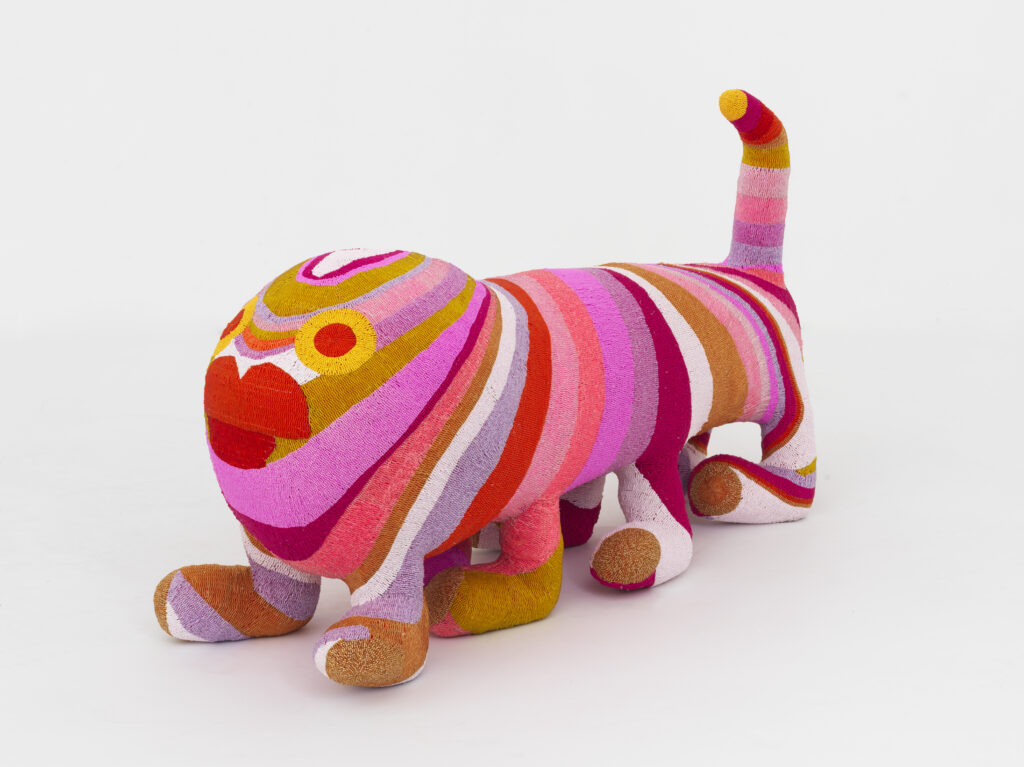
Since opening their collaborative studio in Los Angeles in 2010, twin brothers Simon and Nikolai (“Niki”) Haas have fashioned an eclectic range of materials into hundreds of imaginative sculptures. The artists are world-renowned for their artisan expertise, honed from time spent in their father’s stone carving studio and their experimental cross-pollination. “Their work is characterized by these not easily married materials,” Carter Foster, the Blanton’s chief curator shared, noting that the brothers often wed sources as disparate as Pele de Tigre marble, Venetian glass beads and Icelandic sheepskin into singular, sublime objects.
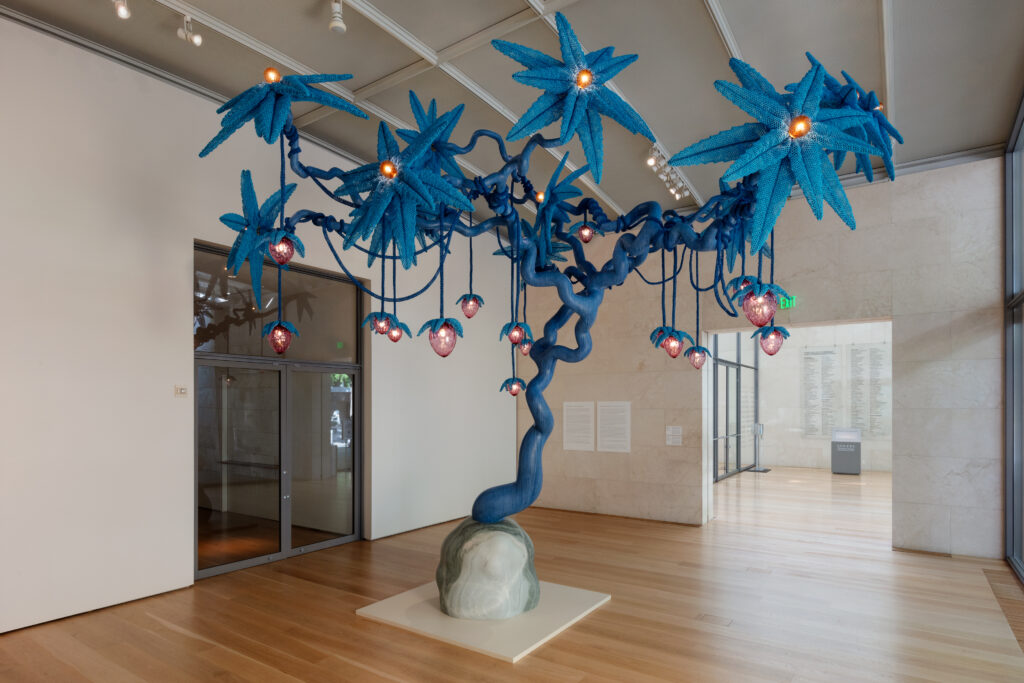
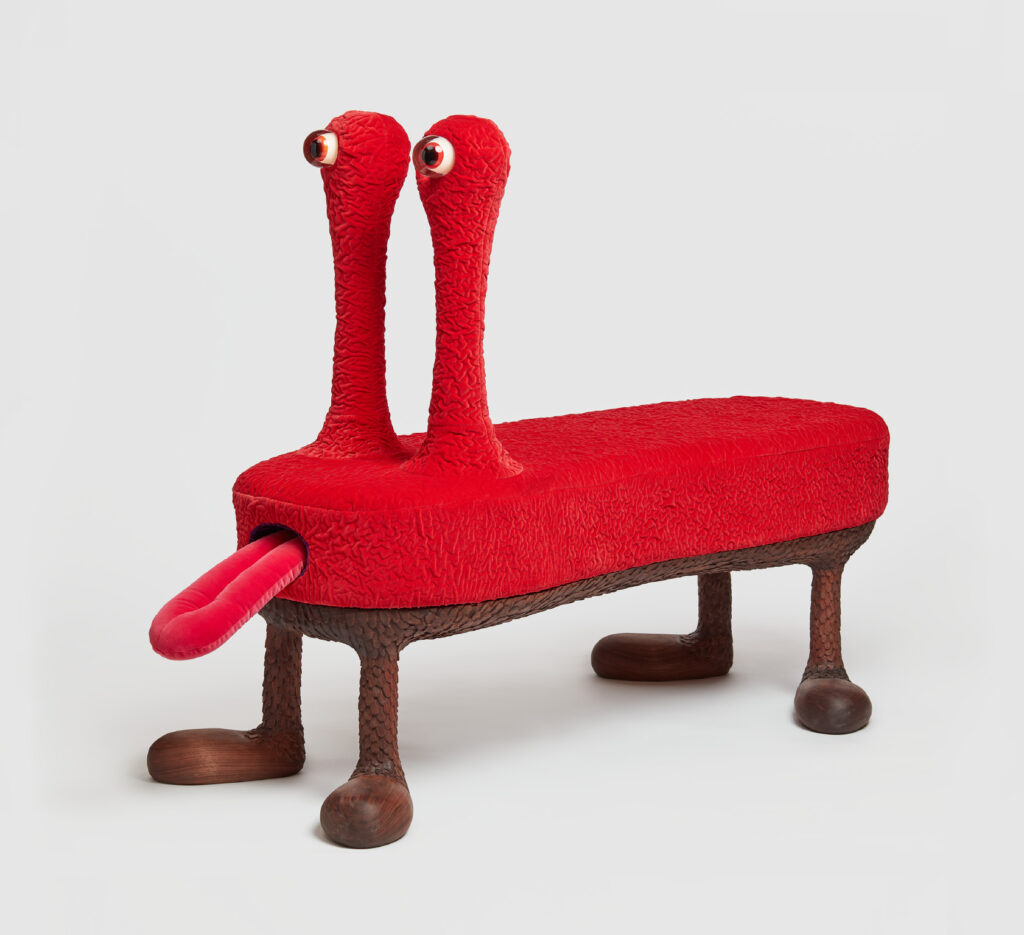
This fall, the Blanton will exhibit over 80 of the Haas brothers’ creations. Curated as a series of vignettes, each scene transports audiences into the twins’ wondrously strange ecosystem. There, a tree’s sapphire vines twine around glowing, glass-blown strawberries. Anemone-like creatures, molded from petaled porcelain, seem to breathe through puckered, lustrous mouths. The brothers’ objects, at once familiar and otherworldly, evoke the “uncanny valley.” The exhibition’s psychological theory namesake describes the eerie sensation elicit from their viewers. This “uncanniness” is perhaps exemplified by one of the exhibit’s “Beast Chairs,” in which, from the fur-covered chaise’s center, pokes a curious, golden tongue.
SHOP


Portal into another universe
If material is a portal into the brothers’ world, then their magic is in the details: the branches on “The Strawberry Tree,” for example, are beaded according to a set of 26 rules, a Fibonacci-like progression developed by Simon Haas, inspired by the elegant logic of nature. Some of the brothers’ collaborators — women collectives based in Cape Town, South Africa and California’s Central Valley — replicated the sequence, and the intricately beaded tree is a result of those artistic partnerships. This model of community-based creation mirrors the Haas twins’ upbringing in a family of artists, where “making” itself is a love language.
The Haas brothers often refer to their fantastical, yet highly methodological, process as generating “problem-solving fantasies.” Their work merges Simon’s penchant for analytical precision with Nikolai’s whimsical, even sensual, humor.
Foster explains that while the Haas brothers’ work can be read alongside Antoni Gaudí’s architecture and Meret Oppenheim’s Surrealist art, the twins — particularly Nikolai — are equally inspired by popular media. “They combine this really virtuosic technique with a playful sensibility,” Foster reflected, citing the Muppets as another artistic precedent. Many of the Haas brothers’ sculptures bear cheeky, celebrity-inspired names and draw from mainstream cultural references, including “Futurama.”
The Haas brothers’ art invites audiences into another universe — one that may be uncanny, and, at times, unsettling, but also promises startling beauty and precision. Through their shared vision, the artists suggest that the connection between material and self persists long after an object’s formal completion. That process, of creation and reciprocity, may itself be a kind of portal.
“The Haas Brothers: Uncanny Valley” will be on view from Sept. 27, 2026, to Jan. 17, 2027, at the Blanton Museum of Art, with a preview for Members from Sept. 23–26. This exhibit is part of a national tour organized by Cranbrook Art Museum and curated by Laura Mott. The Haas Brothers have previously exhibited at the Nasher Sculpture Center, Katonah Museum of Art, Bass Museum of Art and more.
RELATED: Acclaimed Artist Maya Lin to Bring New Public Artwork to UT Austin