
West China Teahouse Is Brewing a New Social Scene in Austin
With as many as 250 varieties of tea, West China Tea House offers a slow, community-focused gathering space in East Austin
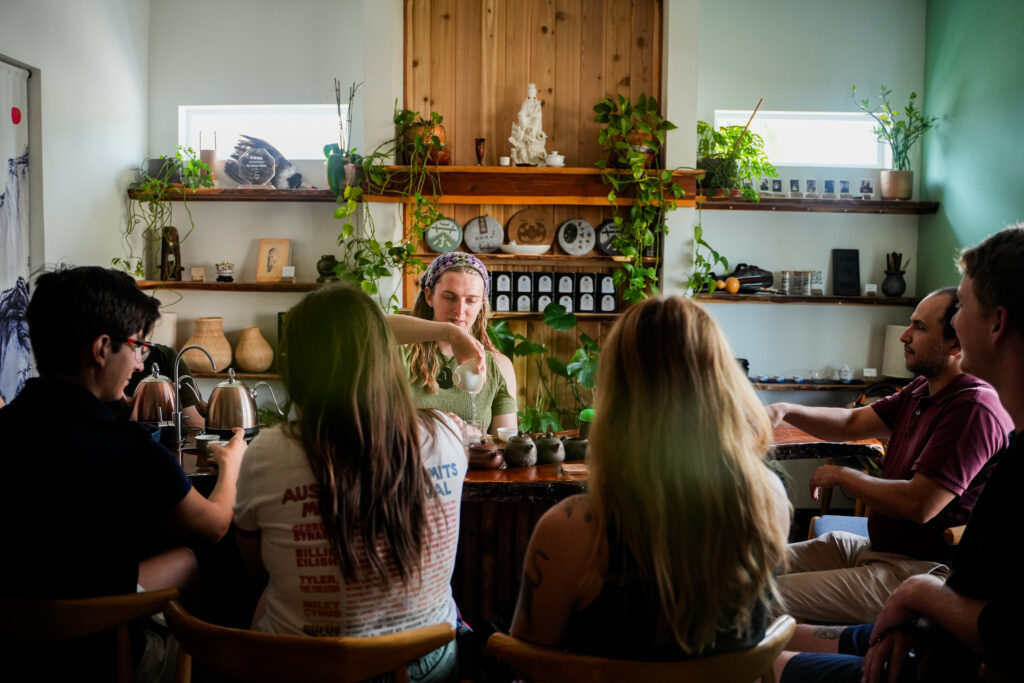
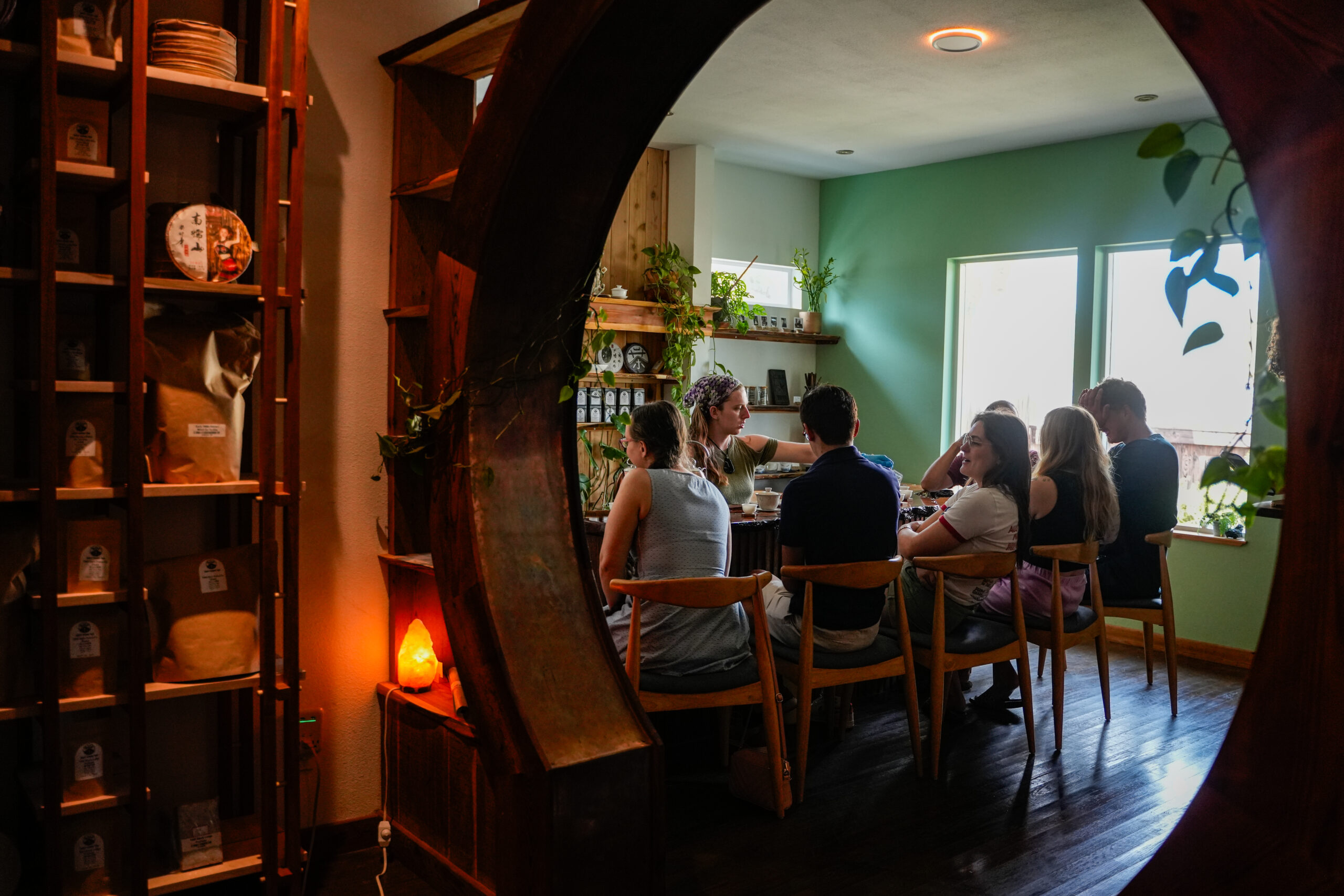
On a recent afternoon at West China Teahouse, light filters through the windows of the 1940s East Seventh Street bungalow, landing on curved wooden tea bars carved from reclaimed mesquite and walnut. The handmade tables anchor the room like altars, setting the stage for gong fu cha — the centuries-old Chinese tea service at its heart. A circular moon door frames the front room, inviting guests into this slow, intentional practice.
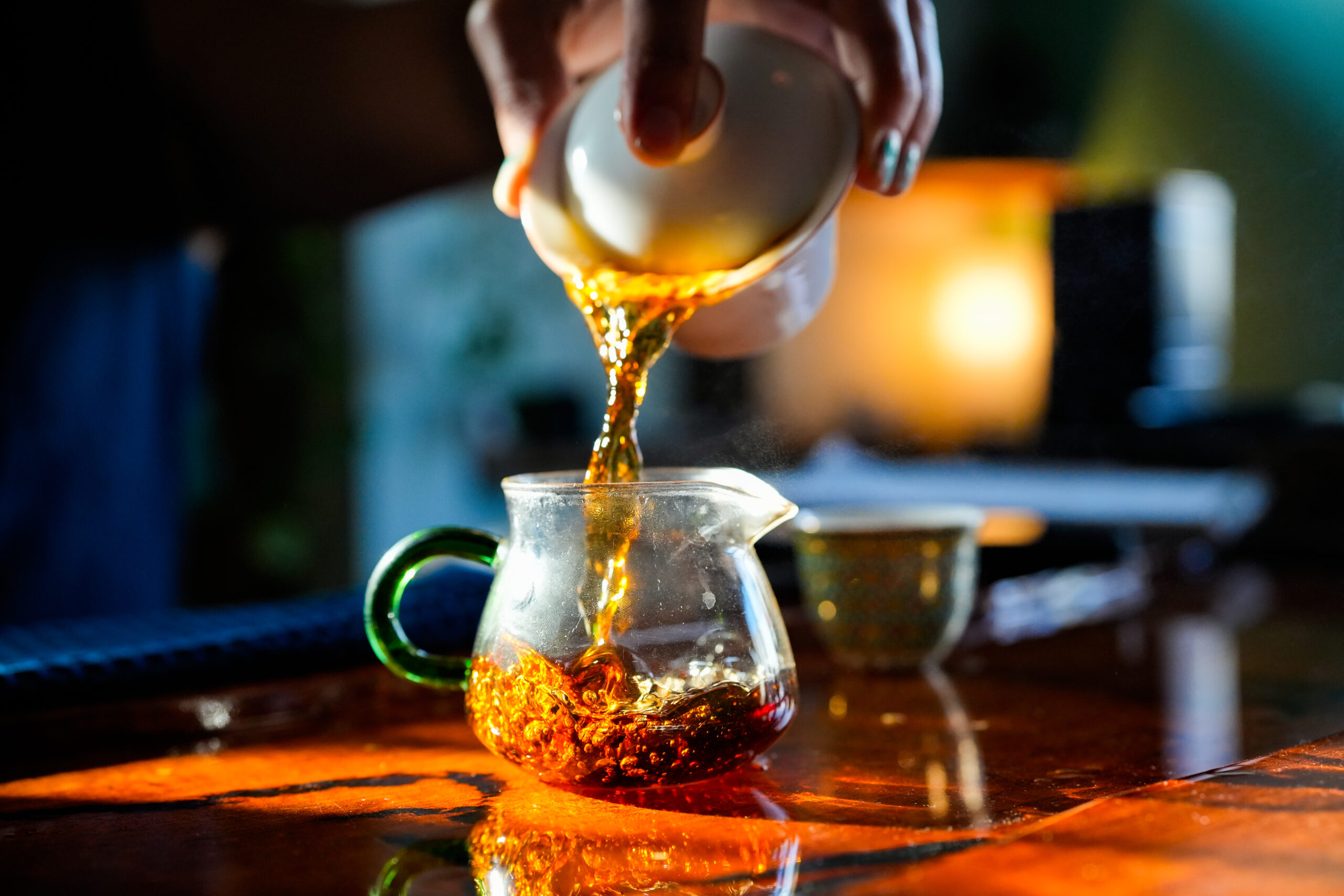
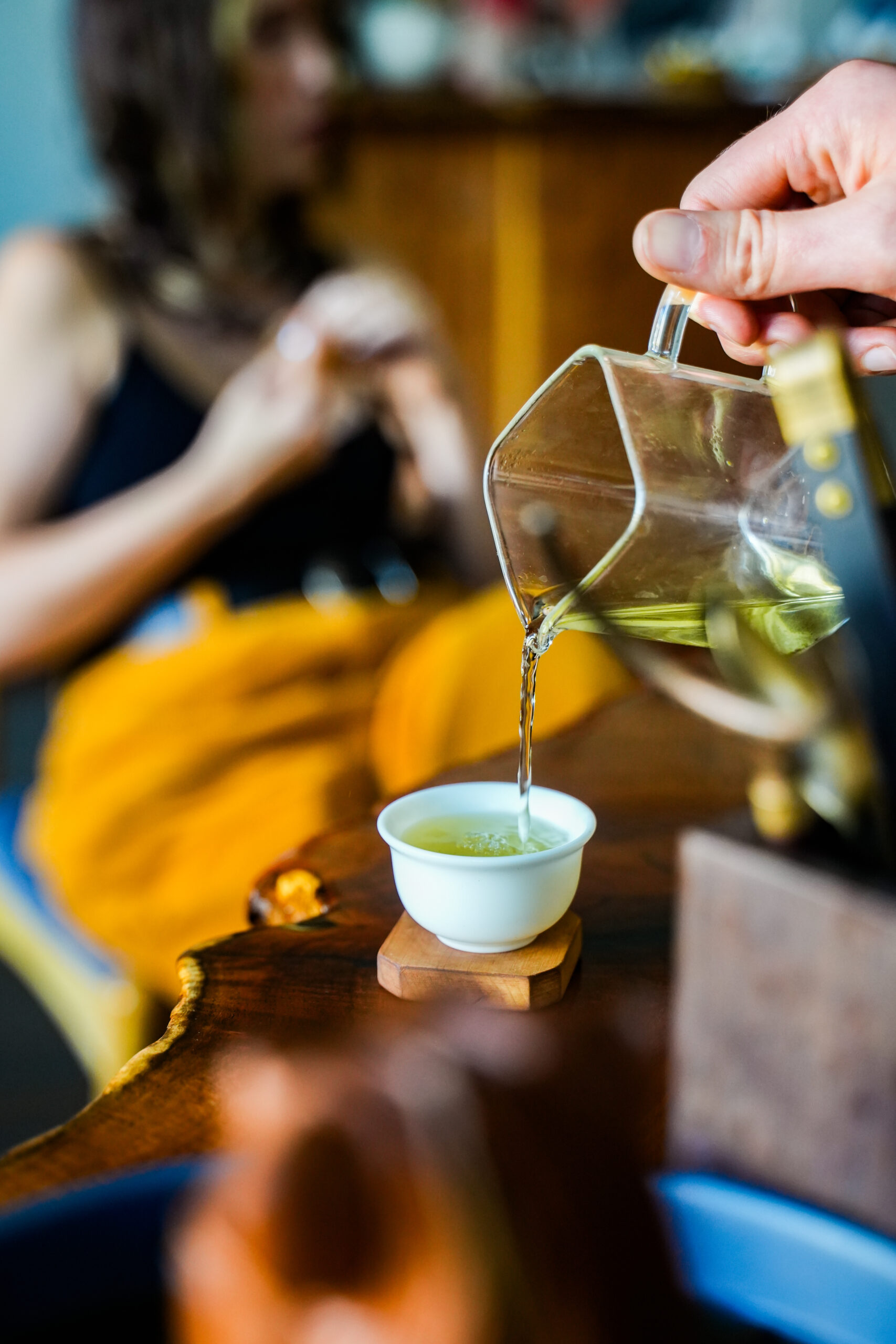
Conversation drifts easily across the burnished wooden tea bar as the server meditatively pours boiling water over loose tea leaves in a gài wǎn, a lidded bowl. After a quick steep, the tea is strained into a gōng dào bēi, or “fairness cup,” ensuring equal strength for everyone at the table. From there, the server pours the tea into chá bēi (teacups). Each guest taps the table in gratitude without interrupting the conversation, which moves from styles of meditation to politics to the origin of names like Snow Duck Shit, an aromatic oolong. No one remains a stranger for long once they take a seat at the tea bar.
For founder and owner So Han Fan, this is the social environment he had been building long before West China Teahouse had a name or address. His relationship with tea began during childhood dim sum meals, which served as his primary connection to Chinese culture while growing up in Houston. Weekend outings with his family were accompanied by loose-leaf teas like pu’er, Tieguanyin oolong, jasmine green tea and chrysanthemum herbal tea. Only later did he realize the pu’er he gravitated toward as an adult was the same tea he had loved as a child.
Where the journey began
While attending college in Santa Cruz, Fan wandered into a small tea shop and encountered gong fu cha for the first time. The ritual and depth of flavor captivated him, but just as important was the way tea gathered people. He began hosting tea sessions for friends, and it quickly became his primary way of bringing people together.
“It was a part of my heritage that I could connect with and share with people. That was a big part of it,” says Fan. “Also I loved the peace that it gave me. Drinking tea helped ground me and gave me a ritual and something to center myself on and to share with people.”
Fan relocated to Austin in 2007 after accepting a job as a medical researcher for a private consultancy startup, and he also began working at a now-shuttered teahouse. In 2010, he took a life-changing trip to China, where he lived for three years and learned Mandarin. Though he was there for environmental research, he spent his free time traveling to tea farms and connecting with growers.
“I saw the plants and I met the people,” says Fan. “That’s the main thing, because that’s how you really learn about tea. There’s no one who can tell you about tea more than the plant itself and the people who grow it can tell you about it.”
Steep after steep
Those relationships became the foundation for West China Tea, which began almost accidentally after a shipment Fan mailed home was rejected by U.S. customs. To retrieve it, he registered an import business and FDA receiving facility. When the startup soon folded, he was left unemployed — but newly licensed to import tea.
He began hosting twice-weekly gatherings out of a friend’s jewelry studio. That momentum led to the 2014 opening of his first teahouse in a 200-square-foot space behind the now-shuttered Spider House. Three years later, he expanded into a 3,000-square-foot building along the I-35 feeder, where he now hosts classes, community events and late-night dance parties fueled entirely by tea.
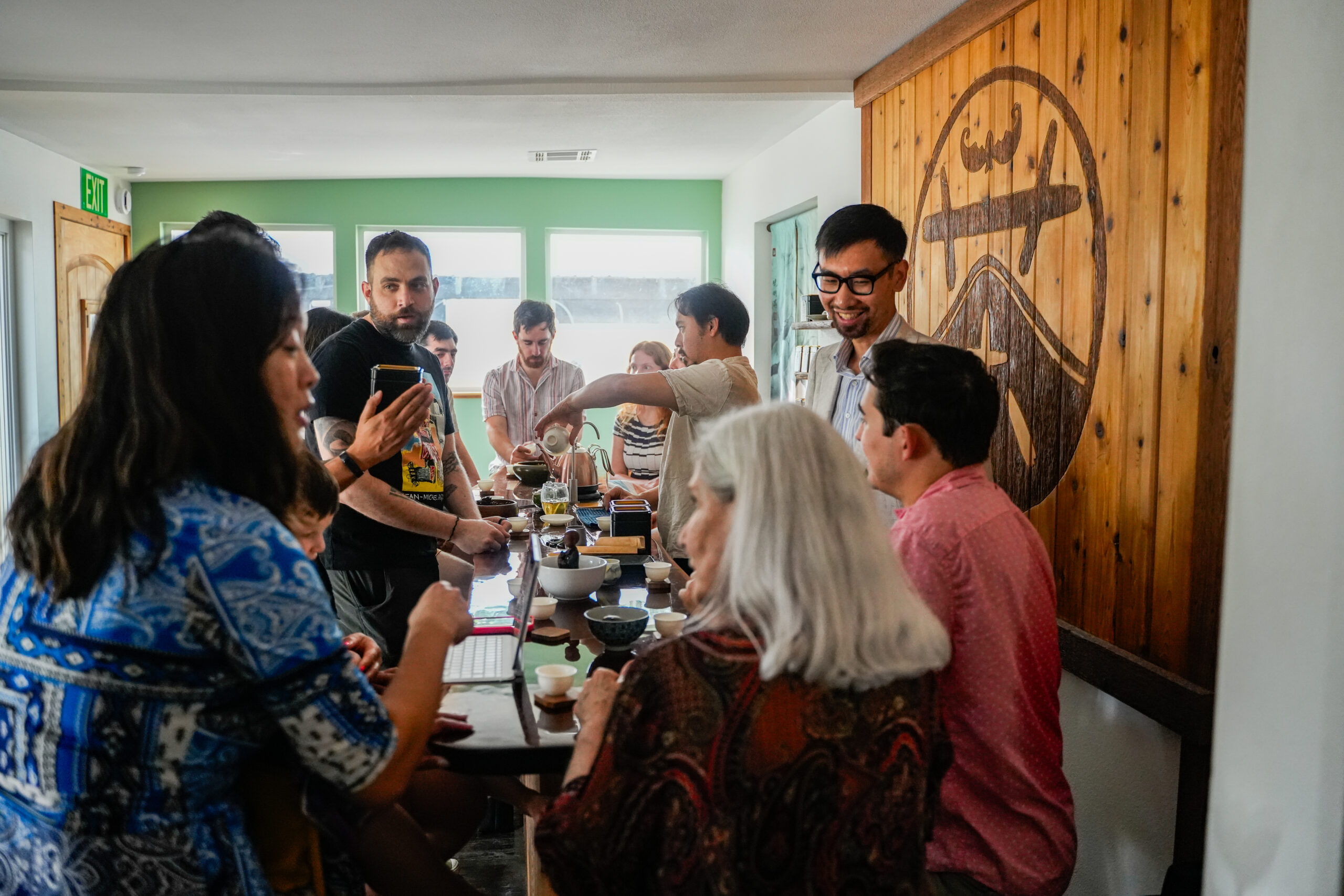
“There is no better replacement for alcohol than tea,” says Fan. Unlike non-alcoholic cocktails or zero-proof beer, which he finds incomplete, tea is already whole and grounded in ritual and meaning. More importantly, it creates a fundamentally different social dynamic. At West China Tea, guests drink the same tea together, steep after steep, rather than ordering individualized drinks. That shared experience lowers barriers. Conversations unfold organically, but silence is also welcome.
RELATED: Sip & Savor: TRIBEZA’s Guide to Afternoon Tea in Austin
Peace in the practice
“To approach a stranger at a bar requires some level of very being very extroverted, and there’s a lot of baggage that goes along with it,” says Fan. “There’s a lot of implications and assumptions about that approach, especially when people are drunk and they can’t communicate with each other.”
Fan has cultivated an inclusive environment that draws a diverse clientele. “We definitely have a more diverse, in pretty much every category, audience than the general population of Austin,” says Fan.” I think that, because we’re an actively inclusive space, people who are excluded from default society are more likely to hang out where they’re included.”
That sense of belonging endured even as the address changed. In 2024, the teahouse was displaced by the Interstate 35 expansion. Although West China Tea gave up its home of seven years, the Texas Department of Transportation awarded the business a $560,000 community impact grant to help secure a new space. Fan and his team renovated an East Seventh Street bungalow while offering temporary tea service out of a yoga studio, reopening in May 2025.
Despite ongoing challenges — pivoting to e-commerce during the pandemic, having tools stolen during the move and navigating rising tariffs on imports — Fan finds peace in the practice of gong fu cha.
“Tea is like meditation,” he explains. “It’s an object of meditation, just the way saying a mantra is an object of meditation. It’s an in-the-world meditation, which is nice, and it teaches you to connect with yourself. It teaches you to connect with nature and to connect with other people… Tea has also taught me balance, equilibrium and patience.”
Community first
Fan still travels to China to buy tea directly from his expanded network of small farmers, and these relationships remain essential to the business. “Organic certification exists (in China) but very few tea farmers do it because people don’t have that much faith in the organic label,” Fan said. “Getting the tea from someone you know and trust is worth a lot more than a label. And the type of tea we carry here is not tea you buy in a store in China — not a grocery store, not a tea store.”
At any given time, West China Tea House stocks as many as 250 varieties of tea. The tins and compressed discs, wrapped in delicate paper, share shelf space with teaware made by artists across China—including San Meng of Xishuangbanna in Yunnan, Letao Studio of Dehua in Fujian, and Chen Zhu of Chaozhou in Guangdong—alongside work by local artists Chris Long, Sarah Reesor and Juliana Dumas. Together, they reinforce the teahouse’s ethos: tradition carried forward through living hands.
The East Seventh Street space now includes three tea bar areas, private tasting rooms and a low-table room with floor pillows available to rent. Renovations are underway for an outdoor Chinese tea garden with seating, a pond and space for performances and pop-ups. Fan envisions West China Tea House locations in major cities around the world. But for now, daily growth looks like shared cups, slower conversations and a room full of people choosing to sit together.
“Community is not only a means to an end, it is an end,” says Fan. ”And if you take community as the end, then people who crave community will support you, because everyone craves community honestly. I believe that, in and of itself, will support a business, because people want that so very much.”
RELATED: First Look at Folklore, Camp Lucy’s Stunning New Spa & Wellness Escape in the Texas Hill Country