
A Closer Look at Terraluz, East Austin’s Striking Rammed Earth Residence
Located in the Holly neighborhood, this nature-inspired compound invites viewers to reconnect with the earth
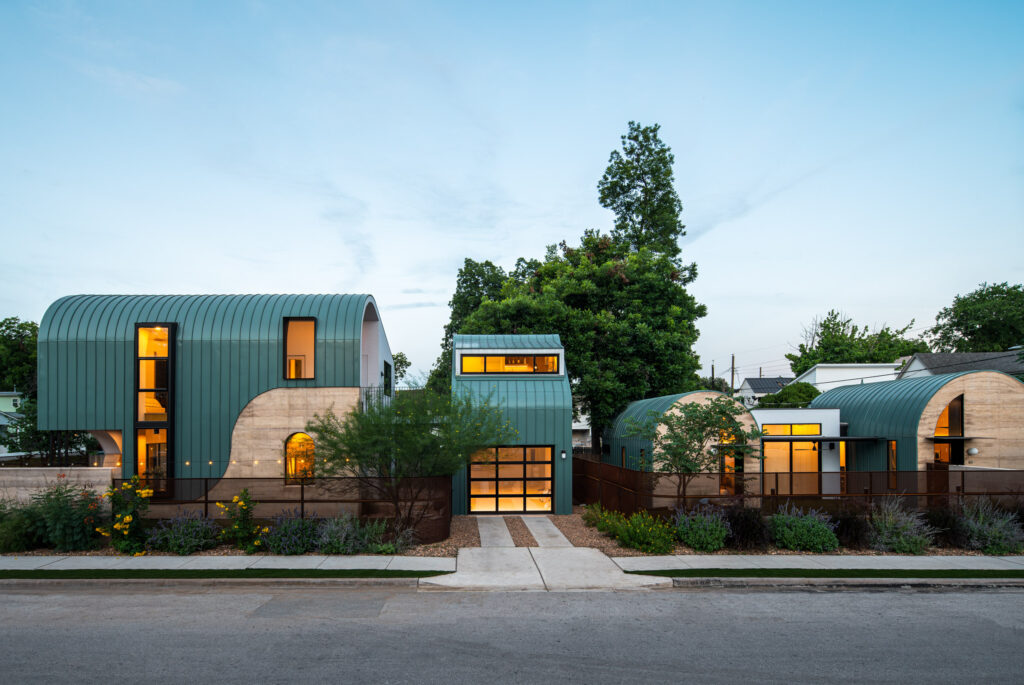
This year’s 40th annual AIA Austin Homes Tour is full of thought-provoking visuals. Among the nine residences selected for 2026 are patios framed by 11-foot-tall steel doors, facades made of modified cork and the eye-catching Terraluz compound by Davey McEathron Architecture in East Austin’s Holly neighborhood.
When approaching this multi-unit home spanning more than 2,000 square feet, one might begin to daydream. Its sage-green roof emulates the curves of a gigantic succulent, and the main dwelling connects to a guest suite over the garage via a skybridge. On the right day, you might see someone walking between these spaces atop a hammock built into the elevated pathway. “This neighborhood made it a good spot to experiment a bit with the architecture,” says the head of the firm, Davey McEathron.
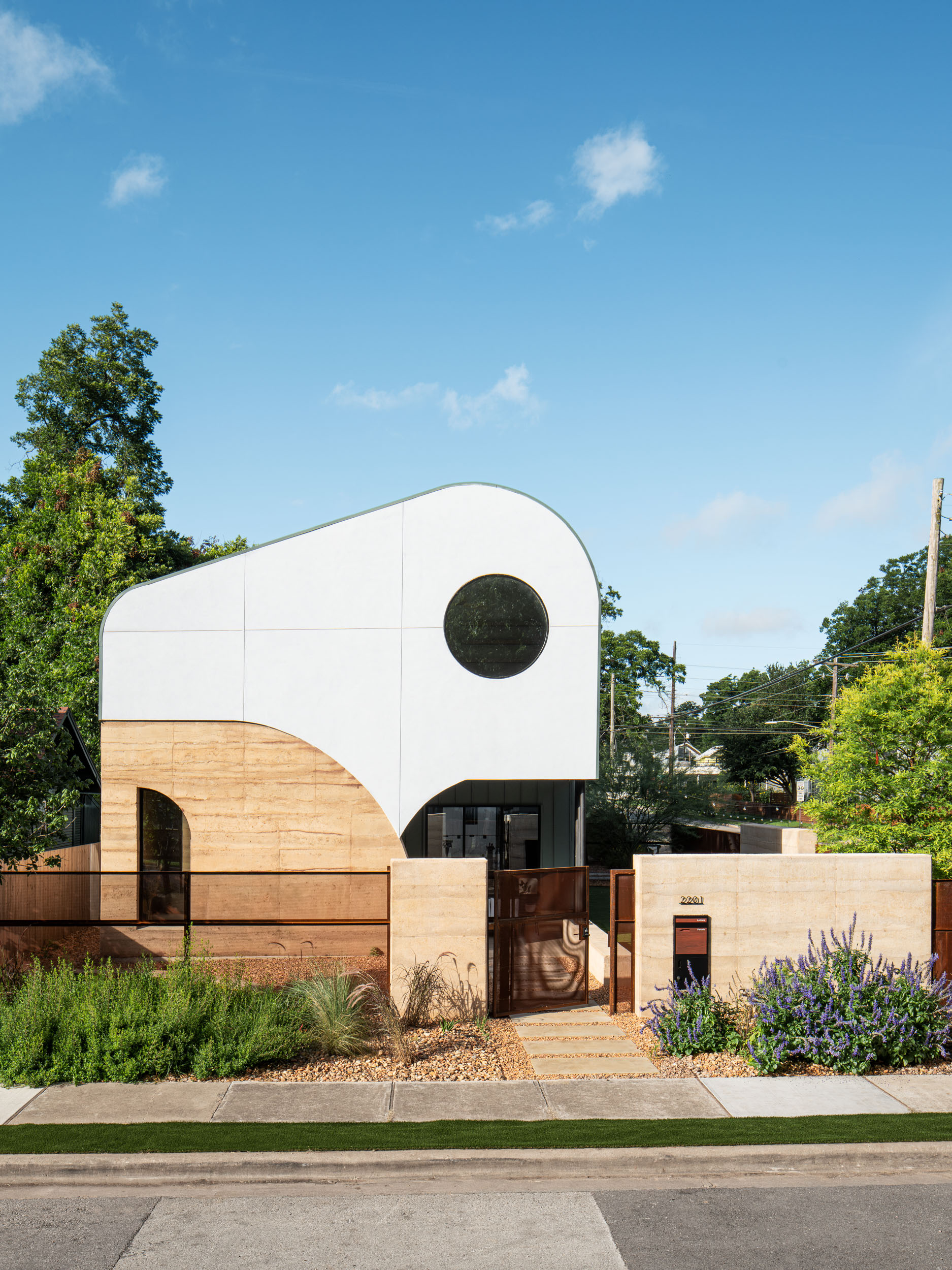
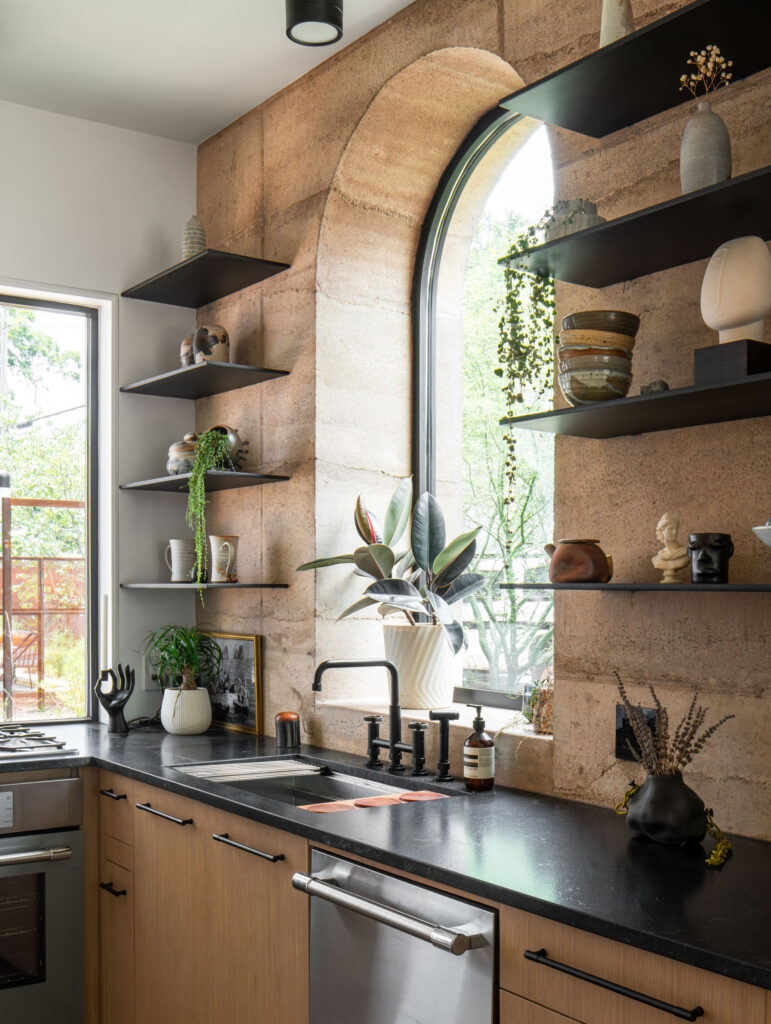
Terraluz’s most notable feature, however, might be its prominent use of rammed-earth walls. This distinct material is made by pressing together layers of soil and aggregate with cement and water. The process results in organic earthen structures that add texture to a home’s visual intrigue while also providing unique environmental benefits. “I am super intrigued by rammed earth,” said AIA Austin’s executive director, Ingrid Spencer, who helped select Terraluz for this year’s tour. “Anything that can help us go back to the ancient traditions of building.”
Choosing to use rammed earth in Austin
Rammed earth has been used throughout history, including in parts of the Great Wall of China. Researchers have noted that, as the U.S. emerged from the Great Depression, it was used more frequently in the American South and Southwest. It’s affordable to build with and, due to its thermal properties, is also effective at regulating indoor temperatures and humidity in places like Texas.
McEathron says the idea to include rammed earth in Terraluz was first suggested by a long-time collaborator of his, Kevin Yang, one of the project’s developers. “He came to us and was like, ‘Hey, what do you think about doing rammed earth for this project?’ What a dream client question to get.” With this as their starting point, a group of architects (McEathron, Bailey Craighead, Blair McKay and Addison Cundiff) and builders (Robert Rabb and George Wakefield of Rabb Construction) assembled to construct an East Austin home unlike any other.
Ancient techniques and Texas soil
To get a feel for working with rammed earth, a small team traveled to Arizona to learn the fundamentals from Quentin Branch, a master builder whose practice focuses on energy efficiency and sustainability. Over three days, they took in various fabrication techniques while working alongside Branch. With dirt under their nails and hard-earned knowledge under their belts, they were ready to begin their work on Terraluz.
Once back in Texas, McEathron’s builder headed to Marble Falls to source the aggregate, in this case decomposed pink granite. At the quarry, he realized he had also stumbled upon a solution to a problem they had been trying to solve: The soil at the East Austin job site was too high in clay to use for construction. However, the builder noticed the soil in Marble Falls had the composition they needed. While pulling resources from the Terraluz lot wasn’t an option, they could still create walls with Texas earth sourced from less than an hour’s drive away.
Bringing the desert into the heart of Austin
With raw building materials at the heart of its design, Terraluz is both a product of nature and a tribute to it. Even the colors in the home’s visual palette pay homage to the landscapes of the Southwest. According to McEathron, they came from a hike his team took through the Santa Catalina Mountains immediately after their workshop in Arizona ended.
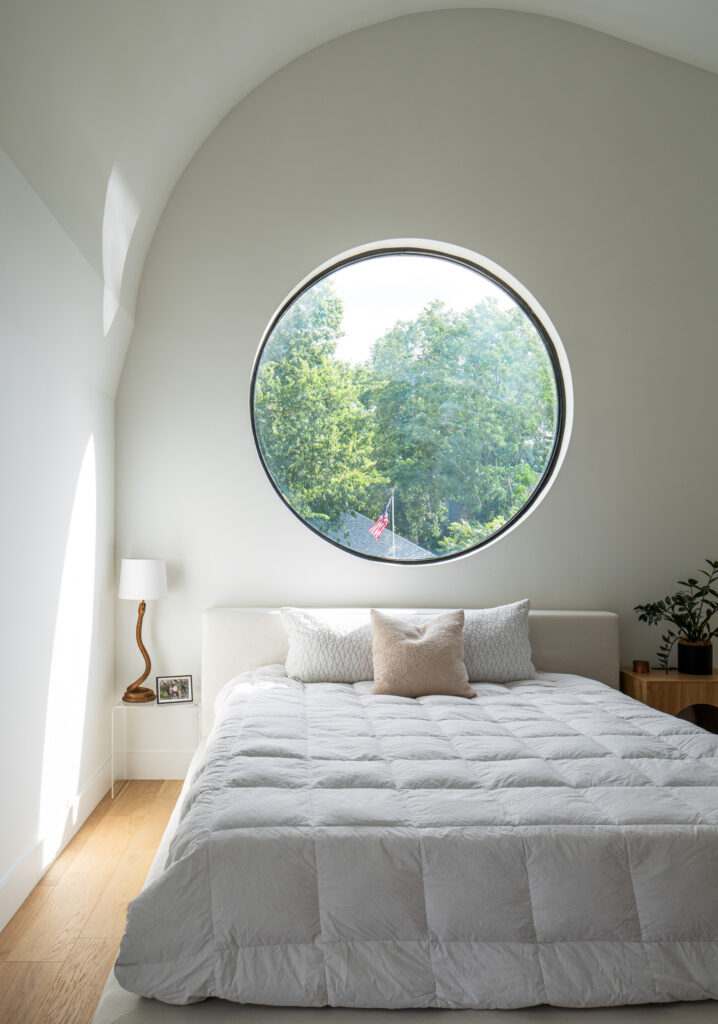
“The green metal siding and roof are sort of reminiscent of the flora … and then the stucco, although it appears white in many of the photos, it’s really a very subtle blue that was meant to capture the ever-present sky that’s in the desert.”
That degree of thoughtfulness has led to a captivating architectural project, one that places value on what the home looks like as well as the ground from which it was raised.
You can get tickets to see Terraluz and eight other notable homes on the AIA Austin Homes Tour on Oct. 24 and 25.
RELATED: Garden or Cafe? Leona Combines the Best of Both in South Austin