
How Deep Eddy Cabaret Became One of Austin’s Most Beloved Neighborhood Bars
Owner Will Bridges reflects on preserving the character and community that have defined the neighborhood institution
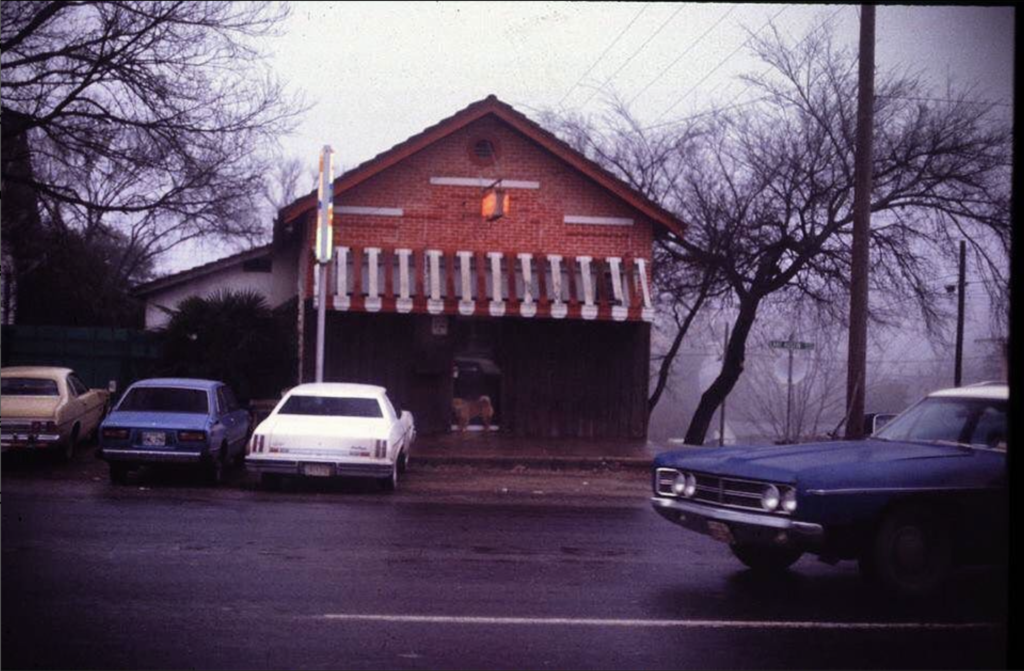
Long before Deep Eddy Cabaret became one of Austin’s most beloved neighborhood bars, people were gathering here. Not for a drink, but for the water.
Long before Austin was Austin, Deep Eddy Swimming Hole drew people to its spring-fed waters. Indigenous communities camped nearby. Fishermen stopped at Deep Eddy Grocery to pick up bait before heading to the Colorado River. Musicians and artists wandered through the neighborhood and gathered in the building next door, affectionately known as the Hippie House—or Heartbreak Hotel, as Jimmie Dale Gilmore immortalized it in “Deep Eddy Blues.”
When owner Will Bridges once asked Gilmore what the song was really about, the legendary songwriter offered a simple answer.
“That area just has a real special energy.” For Bridges, everything clicked. “The bar didn’t start the culture,” he says. “It inherited it.”
The idea that Deep Eddy is simply the latest chapter in a place where people have gathered for generations has become Bridges’ philosophy as steward of one of Austin’s most treasured institutions.
“I’m kind of more just like a steward of it,” he says. “It’s almost like I’m not in charge. It has a life of its own, and we’re all collectively trying to do right by it.”
People often describe Deep Eddy as Austin’s quintessential dive bar. Bridges doesn’t.
“What we’re really talking about is a casual place where people gather,” he says. “In other parts of the world, they’d call it a public house or a pub.”
That’s what people are really coming for. Community. The regulars return because it’s where they see friends who have become family.
“That’s why they’re coming every day,” Bridges says. “That’s their family.”
Visitors feel it almost immediately, too.
“There’s something universally accepting about it,” Bridges says. “It doesn’t matter if you’re the mayor, a musician, a high-powered businessperson or somebody who’s barely getting by. Everyone’s the same.”
You can stop in after a long walk around the Lady Bird Lake Hike and Bike Trail, still damp from a swim at Deep Eddy Pool. You can celebrate a birthday, introduce your parents to an old Austin institution or spend an afternoon feeding the jukebox with friends. No one is overdressed. No one is underdressed. For a few hours, everyone belongs.

Frozen in time
As Austin continues to evolve, Bridges believes that feeling has only become more meaningful.
“Deep Eddy has become a little bit of a time machine,” he says. “It’s one of the few places where you can still experience the culture that made Austin what it is today.”
He pauses before offering one of his most poignant observations during the interview.
“It’s almost a safe space for people who sometimes feel like tourists in their own hometown.”
That philosophy of preservation began on Bridges’ first day. Rather than reinventing Deep Eddy, he retained the longtime staff, many of whom had spent decades behind the bar. Before making changes, he chose to listen.
“The staff is the heartbeat of that place,” he says. “I had to earn their trust.”
Over time, those bartenders became his historians, teaching him not just how the business operated but why every tradition and every tiny piece of memorabilia mattered. That sense of belonging extends well beyond the walls of the bar.
Every weekend, Deep Eddy hats dot the trail and neighborhoods across Austin. Travelers wear them home like souvenirs. Friends request them from across the country.
For years, Bridges was encouraged to sell them online. He never did.
“I kind of think it’s cool that you have to go to the bar.”
The hats have become something more than merchandise. They’re a quiet signal between strangers that says, “I know that place.”
If Deep Eddy feels frozen in time, it’s by design. “I always joke that it takes a lot of work to make it look like we never did anything.”

One of Austin’s oldest watering holes
When refrigerators are replaced or repairs are made behind the bar, Bridges painstakingly removes decades of stickers, photographs, handwritten notes and memorabilia, sometimes one piece at a time, before carefully placing every item back exactly where it belongs.
Most people never notice. That’s the point. Look a little closer the next time you’re sitting at the bar, and you’ll see the stories Bridges works so hard to preserve.
There’s former owner Bill Hickman’s old shop-class paddle hanging on the wall, along with his baseball glove, still marked with his name. Hickman, who owned Deep Eddy for decades and taught shop class at O. Henry Middle School, left his fingerprints all over the place, literally and figuratively.
Nearby sits the beloved Spuds MacKenzie light draped in Mardi Gras beads, a playful reminder of the years Deep Eddy became Austin’s unofficial Saints bar. Photographs honor longtime regulars who are no longer here, while countless other artifacts tell stories that only bartenders and longtime patrons can fully recount.
Every object has earned its place. The same philosophy guided Bridges’ decision to pursue historic landmark designation. It wasn’t about recognition. It was about protection.
“I wanted to put guardrails in place,” he says. “I didn’t want to leave it up to chance.”
The designation protects Deep Eddy for future generations while providing access to preservation grants that help maintain one of Austin’s oldest watering holes.
Even the bar’s iconic logo carries more meaning than many realize. “People always think it’s a tornado,” Bridges says with a laugh. “It’s actually the eddy.” The swirling mark represents the powerful whirlpool that formed in the Deep Eddy Swimming Hole whenever the river flooded.
“It’s such a metaphor,” he says. “People always say it sucks you in.”
Seventy-five years after Deep Eddy Cabaret first opened its doors, that’s still exactly what it does.

75 years of Deep Eddy Cabaret
For Bridges, the hope isn’t simply that the bar survives another 75 years. It’s that people continue making memories there.
His own story includes a first date with the woman who would become his wife.
Others celebrate birthdays beneath the neon. Some meet lifelong friends. Some stop in after a walk around the trail and unexpectedly stay for hours. Years later, they bring their kids, their parents or old friends back to the same familiar place.
Deep Eddy’s significance extends beyond what is served or displayed behind the bar. As Austin continues to change, it remains a familiar gathering place shaped by generations of regulars, staff members and stories.
And maybe that’s the “special energy” Jimmie Dale Gilmore was talking about all along.
RELATED: The Ultimate Austin Bucket List: A Guide to the City’s Most Iconic Spots