
New Austin Sports Bar Offers a Design-Forward Destination for Game Days and Date Nights
Custom millwork, vintage trophies and 18 televisions hidden in plain sight put a new spin on the traditional sports bar
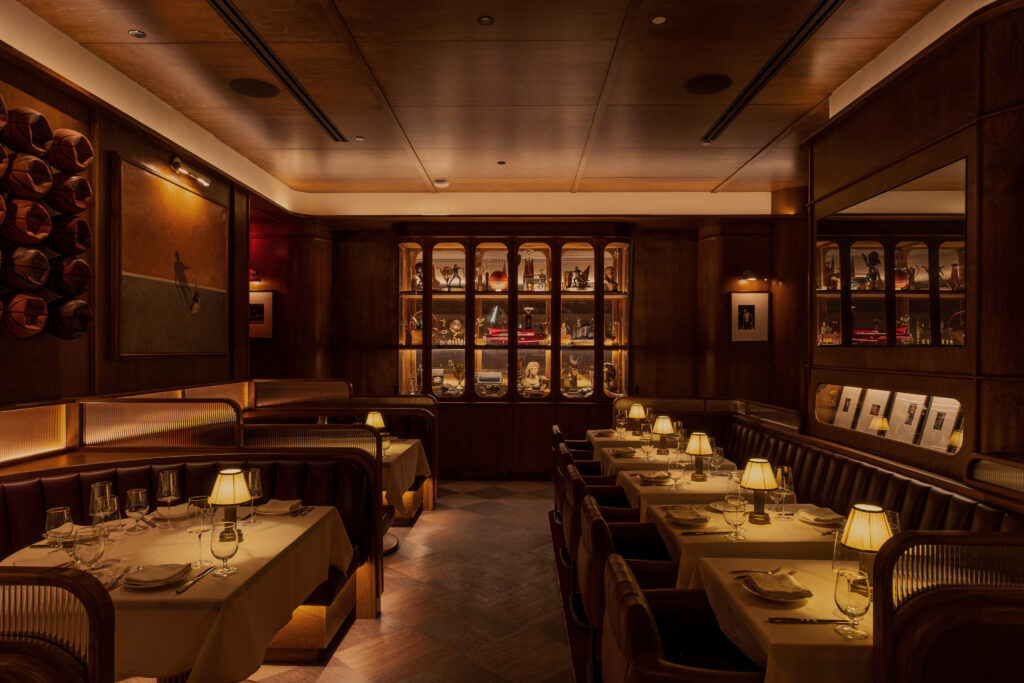
Peter Maxwell Bowden has spent much of his career trying to keep televisions out of restaurants, which made designing Austin Sports Club—and finding a home for 18 of them—an unlikely assignment from the start. Designed by Bowden, founder and creative director of PETERMAX Co., alongside architects from design firm RIOS, the new 4,700-square-foot downtown destination is a collaboration between Austin-based Lobos Hospitality, Airbnb co-founder Joe Gebbia and Boardroom Hospitality’s Kevin Durant and Rich Kleiman. Together, they set out to create something missing from Austin: a place where watching the game doesn’t mean sacrificing the vibe.
Austin Sports Club opened Sept. 10 at 205 E. Third St., serving dinner nightly and brunch on weekends. Its menu trades standard sports-bar fare for a more ambitious lineup, including grilled branzino, chilled lobster rolls, cacio e pepe arancini and caviar with tater tots, alongside cocktails, wine and beer.
That approach extends to the interiors, where Bowden looked beyond the traditional sports bar playbook for inspiration. He traveled back in time to the Colorado ski town where he grew up, with its old-school locker rooms featuring wood benches and paneled coaches’ offices. Natural history museums, with their vitrines and carefully displayed collections, also fit into the vision. “It’s part locker room, part players’ lounge and part museum,” the designer said.
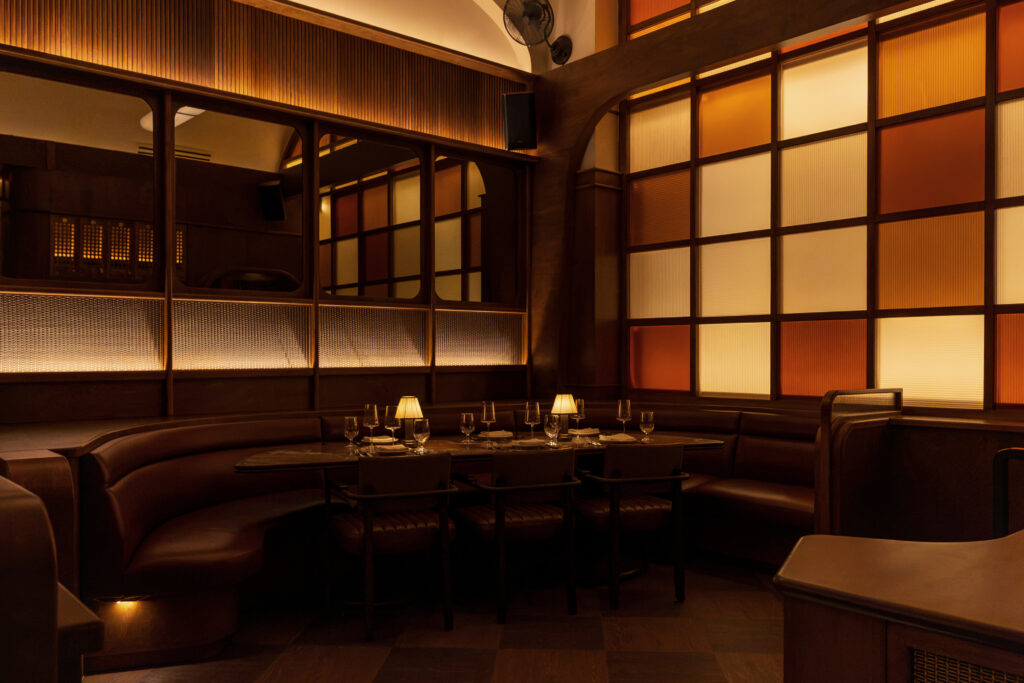
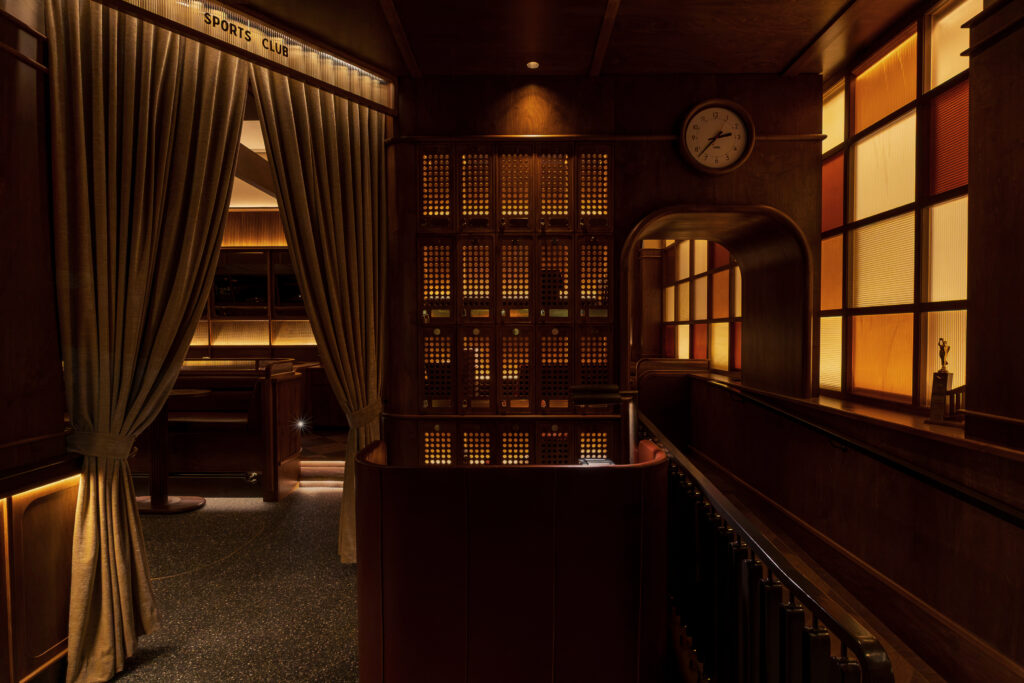
The design
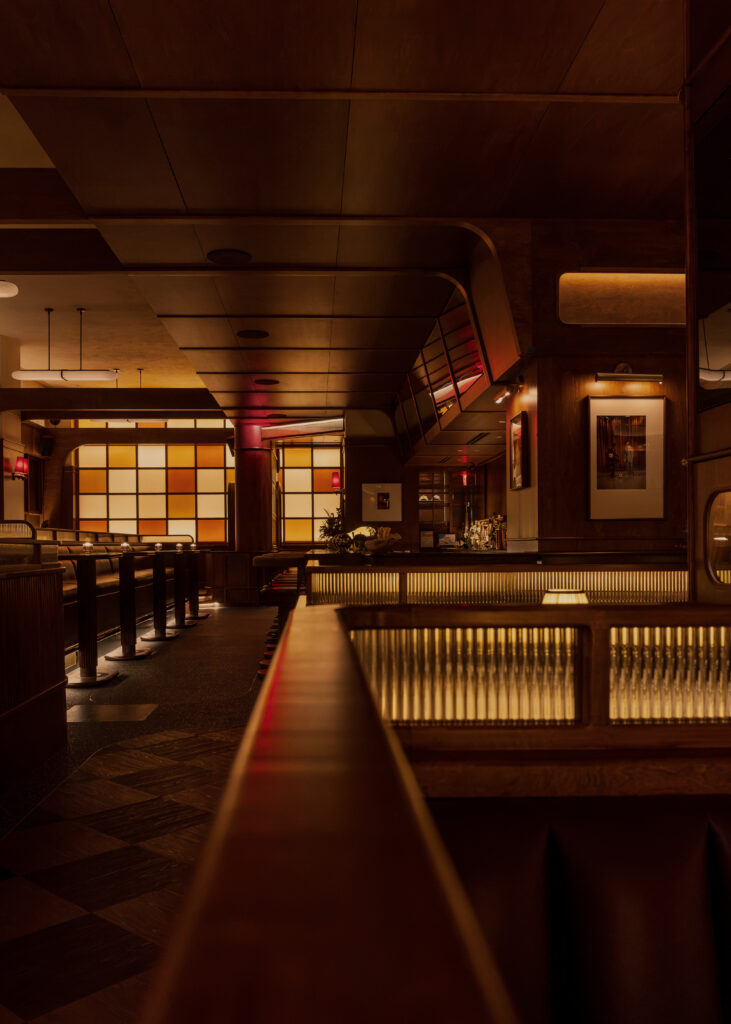
Those influences translated into a restrained palette. “There’s basically only five materials in the whole space,” Bowden said. That visual simplicity gives the space its framework, most notably through a datum line that runs throughout, with wood below and plaster above. Custom millwork and museum-style trophy cases reinforce those references, including one large display of painstakingly sourced vintage trophies separating the main dining room from the 20-seat private dining area.
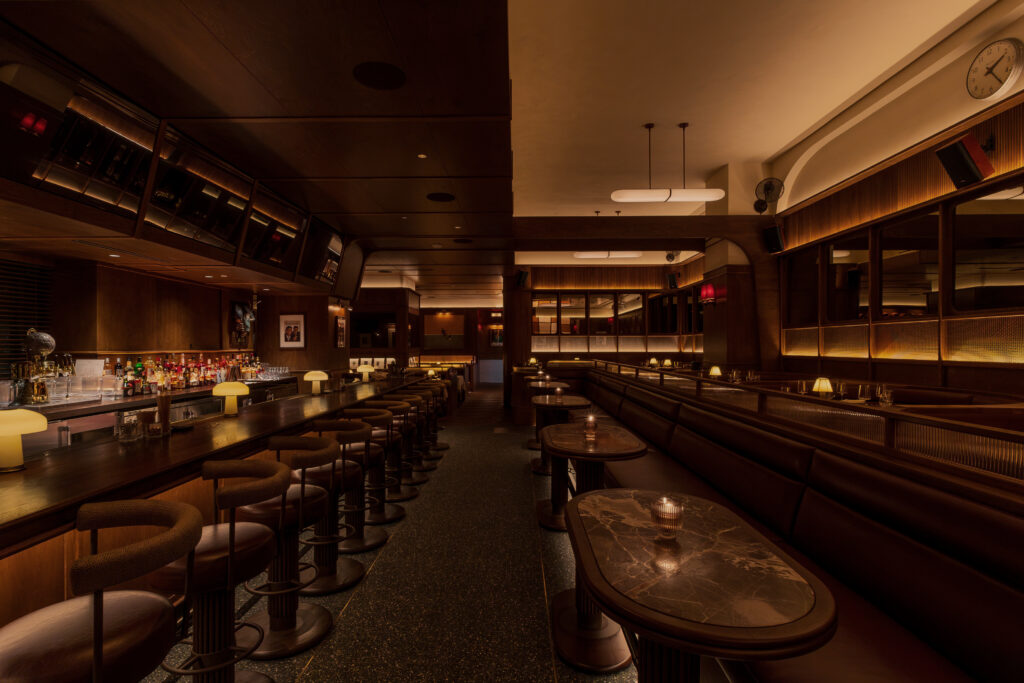
And then there are the televisions. Rather than allowing the 18 screens to dictate the design, Bowden found ways to conceal them throughout the space, with most disappearing behind mirrors or into the custom millwork when not in use. Five are embedded in the woodwork above the bar alone. “It’s all just built into the architecture,” he said. The cleverest example is in the center of the dining room, where a nonnegotiable concrete column became an opportunity. “The solution was to actually lean into that column,” Bowden said. He wrapped it in an eight-foot-square structure that he calls a jumbotron, with banquette seating at the base and a screen hidden on each side.
The same balancing act was applied to the seating plan. Opposite the bar, Bowden raised a series of booths to different heights, preserving sightlines to the screens without sacrificing the intimacy of the dining experience. “It’s basically like stadium seating,” Bowden said. “You’re sitting in these really private booths, but you can see over the person in front of you.”
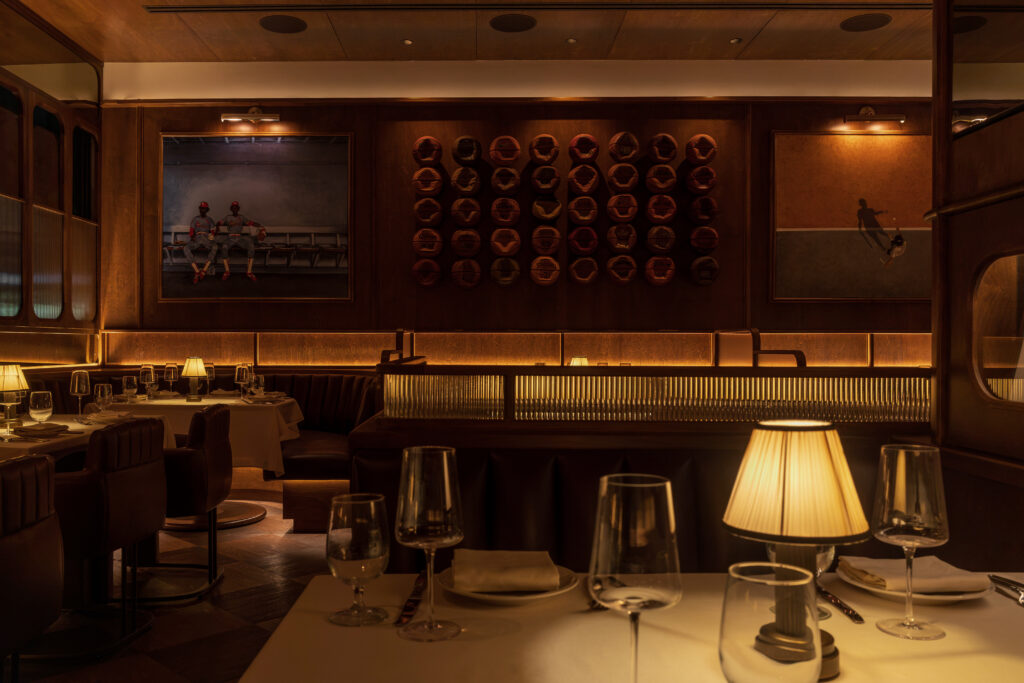
That layered approach continues in the art collection, which mixes vintage sporting objects with framed photography and large-scale paintings. The centerpiece of the dining room is a commissioned piece by Tyrrell Winston—the artist known for his signature works made from discarded basketballs—with deflated basketballs arranged in a grid. Winston’s work was, fittingly, the first image Bowden added to his mood board. “We’ve got to get him,” he remembered thinking. “It makes the room.”
The result is a sports club designed to draw customers whether there’s a game on or not. “It’s 70% a food-and-beverage outlet with good vibes and 30% sports when you need it to be,” Bowden said—exactly the kind of sports bar a designer who doesn’t like sports bars might create.