
The Art and Storytelling Behind Ballet Austin’s Costumes
For TRIBEZA’s September/October Arts & Entertainment Issue, Ballet Austin dancers showcase the delicate design details of some cherished costumes
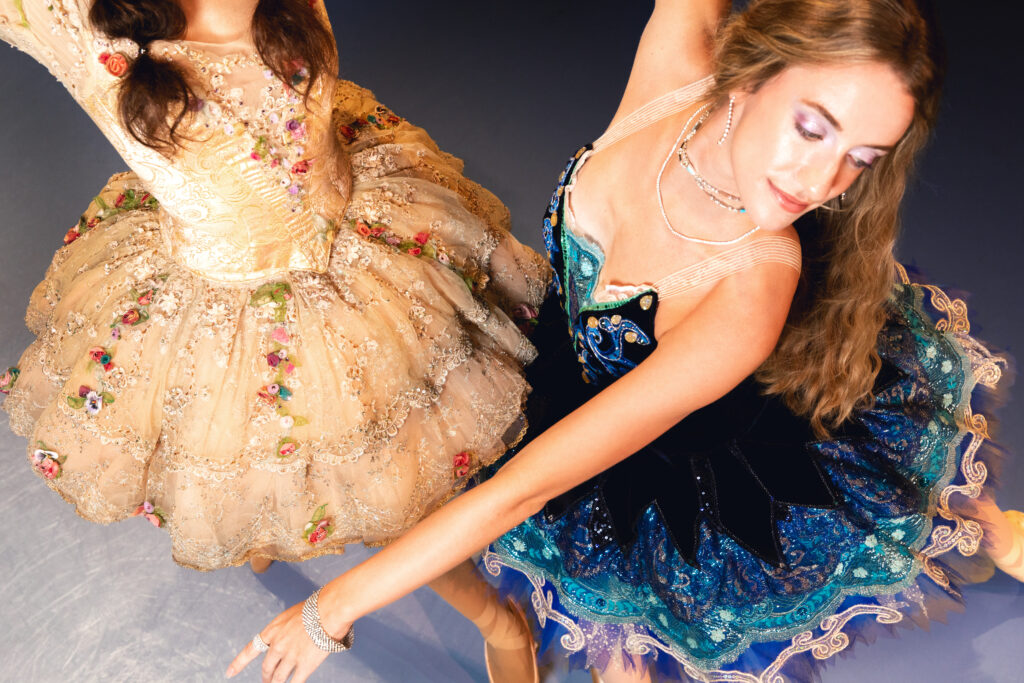
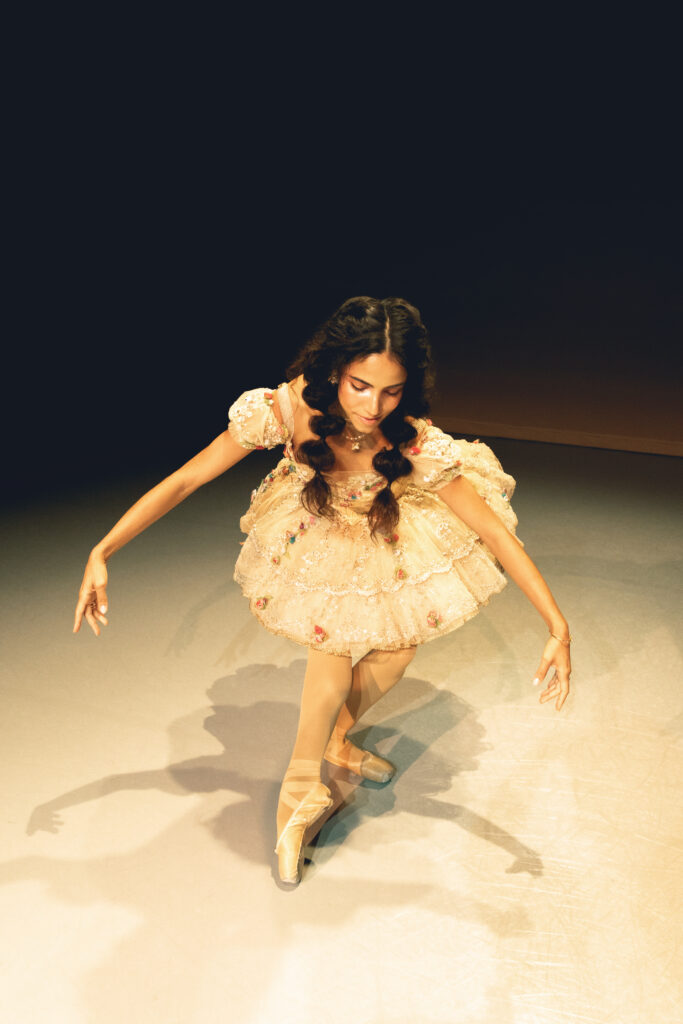
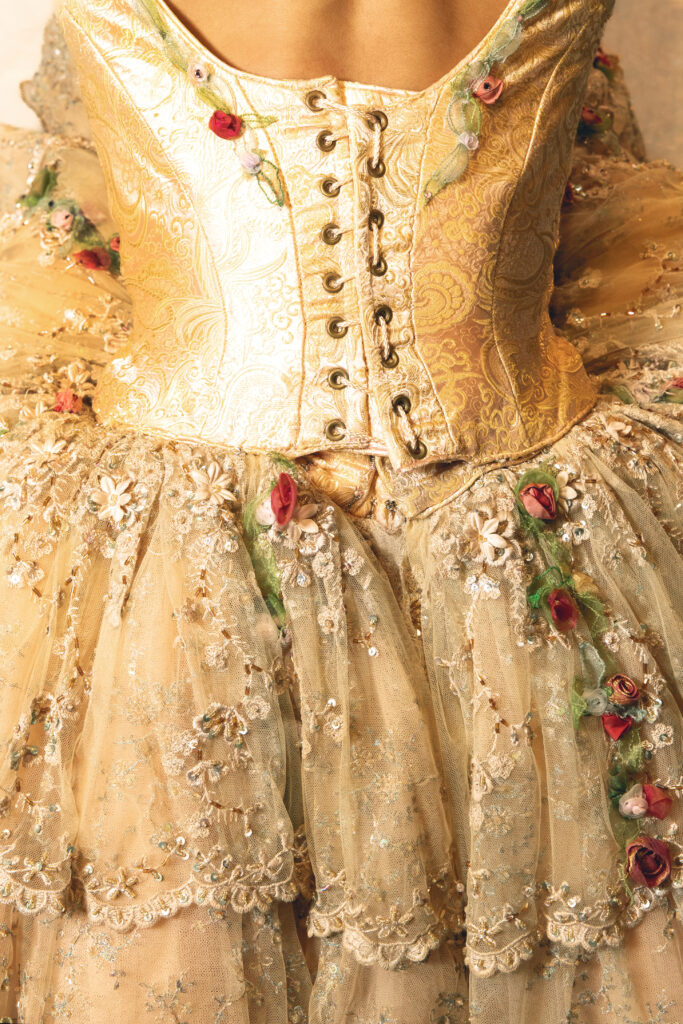
In 2013, when the costume for Ballet Austin’s Sugar Plum Fairy arrived from the Royal Ballet’s workshop in London, nobody could wait to open the box. “It was just magical,” said Stephen Mills, the company’s artistic director of over 25 years.
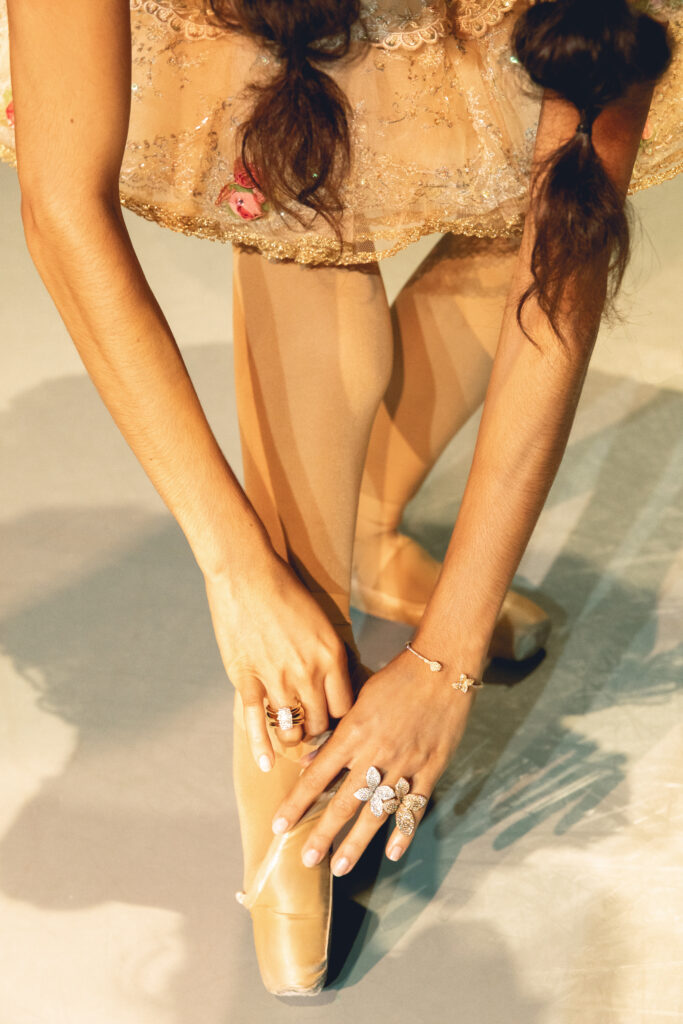
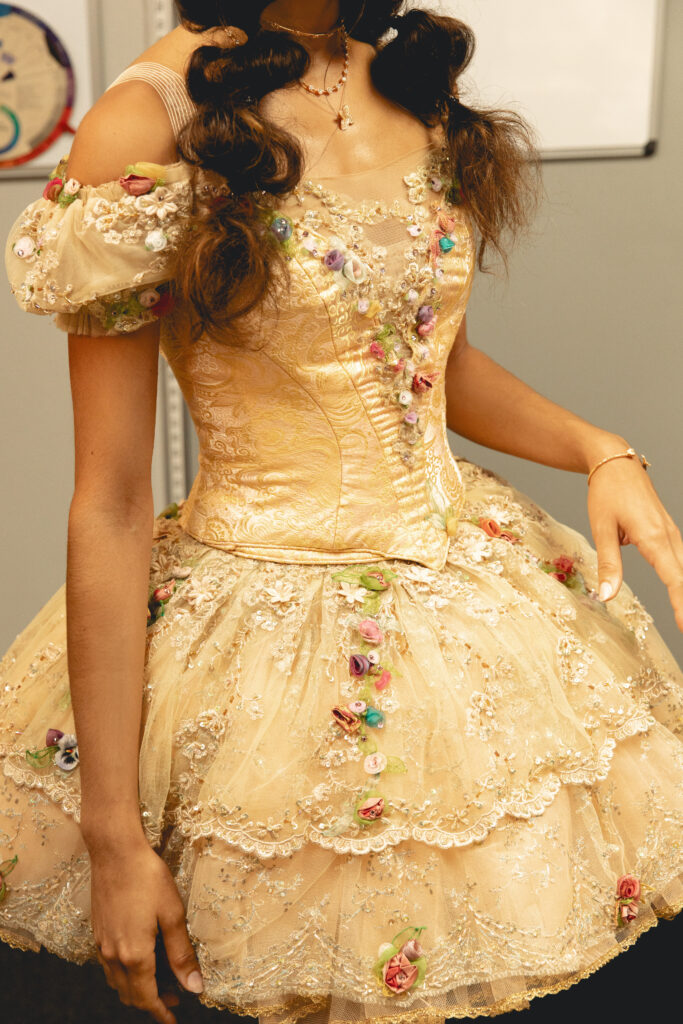
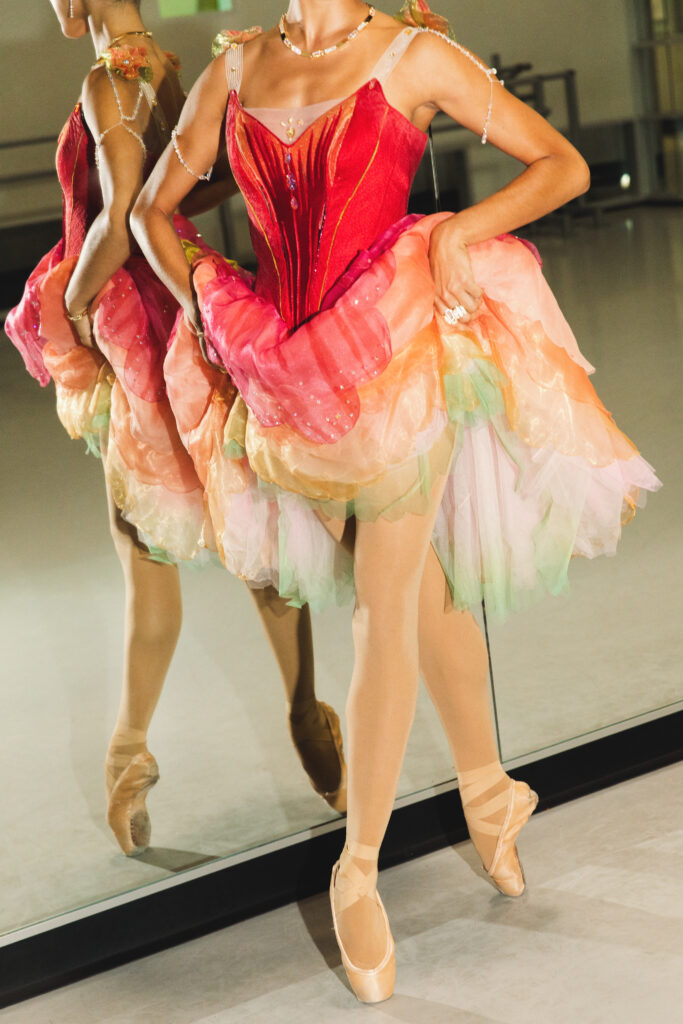
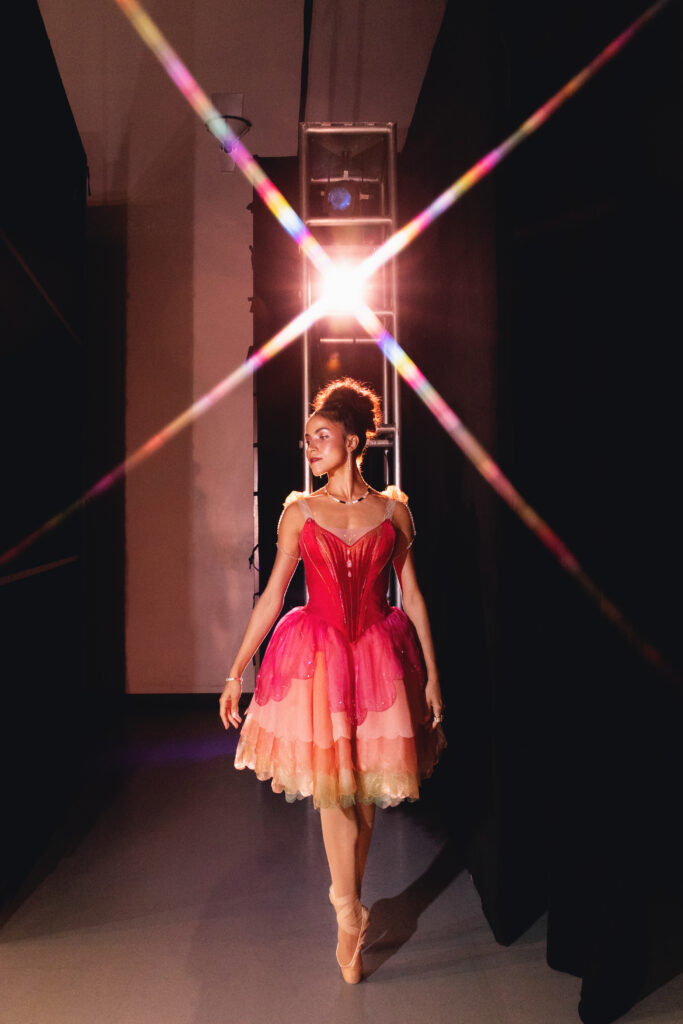
The color is an unlikely peach, not the shade you’d guess would read as the most dynamic costume onstage. But the designer, Judanna Lynn, tied the ribbons around the tutu, giving it a soft, droopy shape instead of the stiff, blade-like silhouettes seen in classical costumes, and scattered rose-toned floral appliqués across the bodice and skirt — decorative touches meant only for the dancer to discover, that no one in the audience will ever see.
“I don’t even know that the dancer wearing it knows that the costume designer did that,” Mills said. “It shows a level of respect from the costume designer to the dancer, which is a very special thing. I think it’s the only costume I’ve seen that has had that one little human connection.” More than a decade later, Ballet Austin still reuses it every December in what Mills calls the company’s most expensive production to build.
SHOP


Costume as storytelling
The idea that a costume can hold a private conversation with the dancer while telling the audience an entirely different story is central to Mills’ thinking about dress onstage. Mills uses costumes as one tool to ensure classical work doesn’t feel frozen in another century.
“The clothes have altered. If you think about the very first ‘The Nutcracker,’ the way people wore clothes in that time is different now,” he said. He also deliberately subverts expectations: a role that might call for a tutu or a long dress instead ends up in shorts or pants.
But the costume never works alone. “Nothing can communicate by itself. It all has to come together to create an environment and an idea,” Mills said. “By the setting, where are they? By the dress, who are they? By the dance, what are they?” He likes a little mystery early on, he says, “but by the end of it, I prefer people to come out going, ‘Yeah, I got that,’ as opposed to ‘What was that?’”
With longtime collaborators like costume designers Margaret Mitchell and Christopher McCollum, plus scenic designer Michael Raiford, Mills says he tries to hand over a clear idea, then get out of the way. “More brains are better than mine,” he said.
Built to move
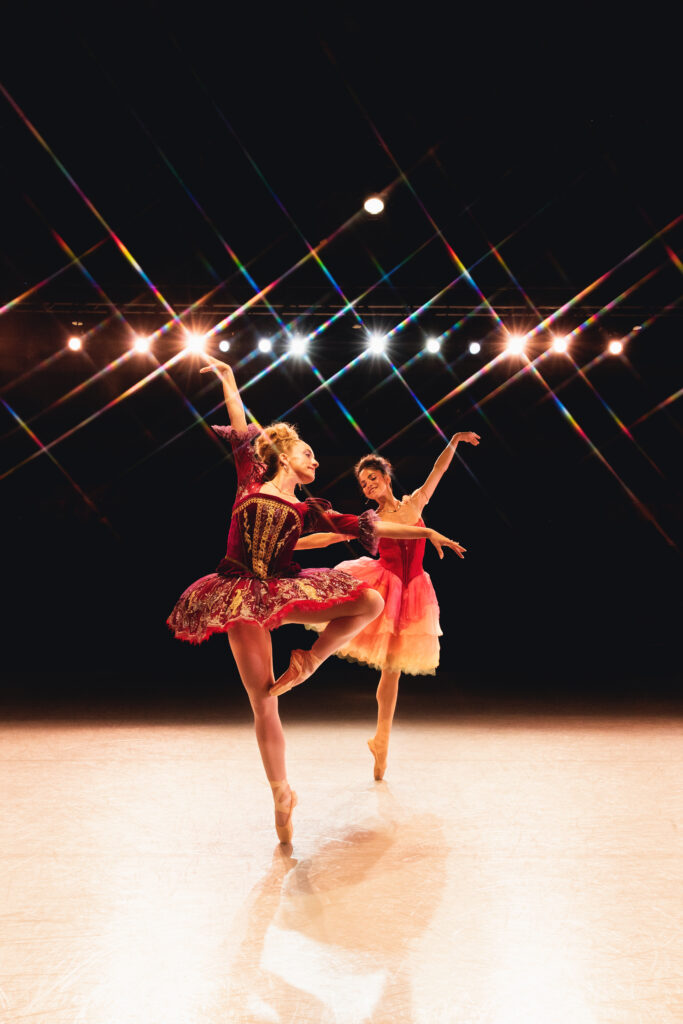
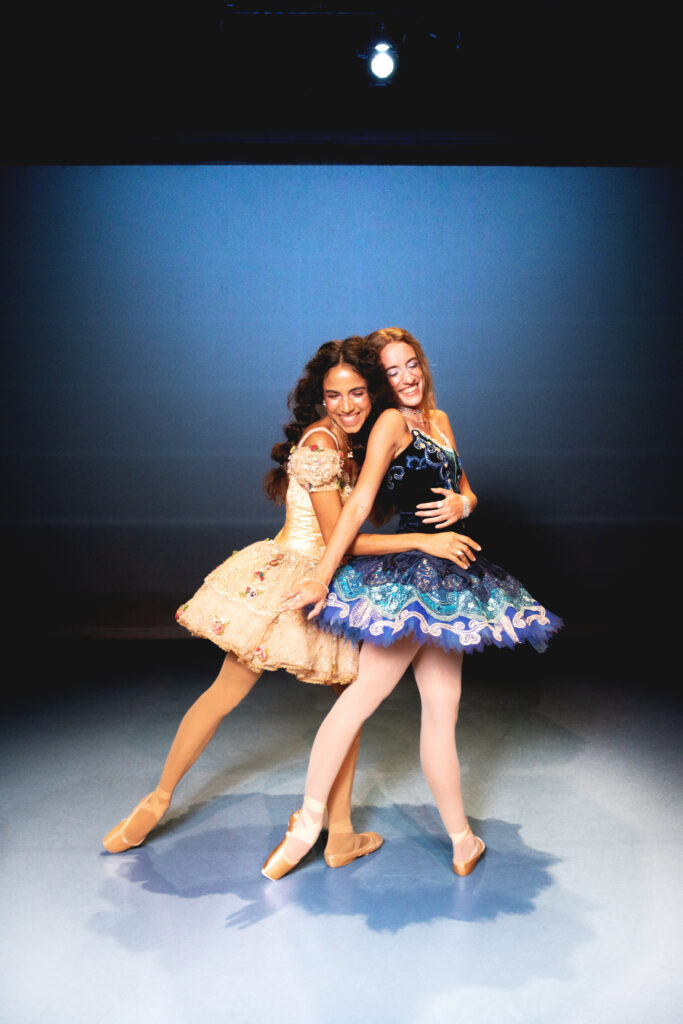
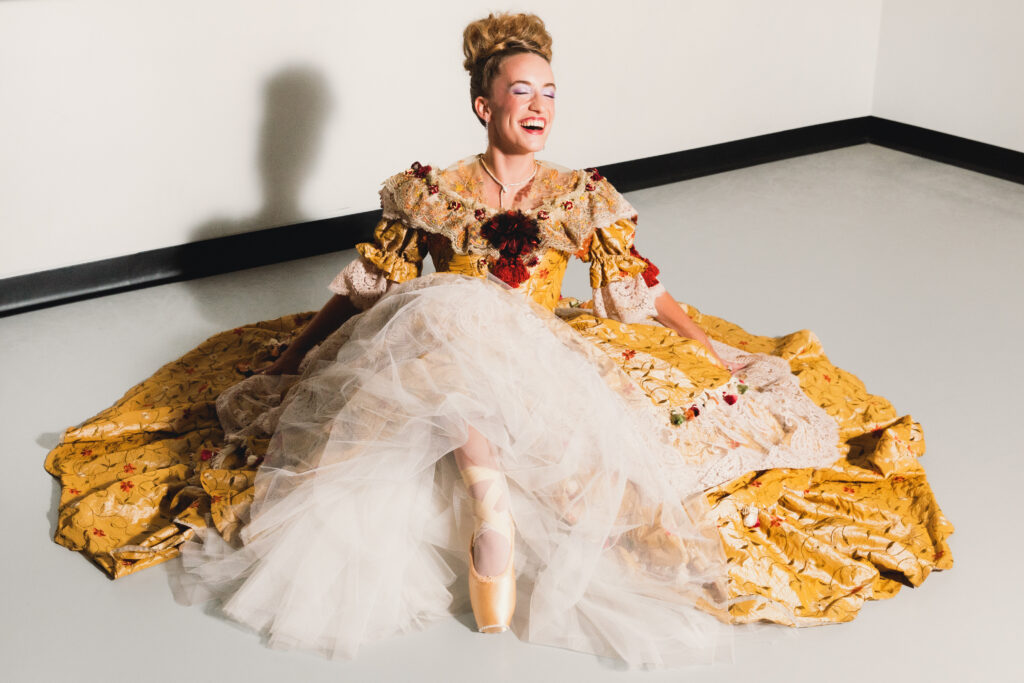
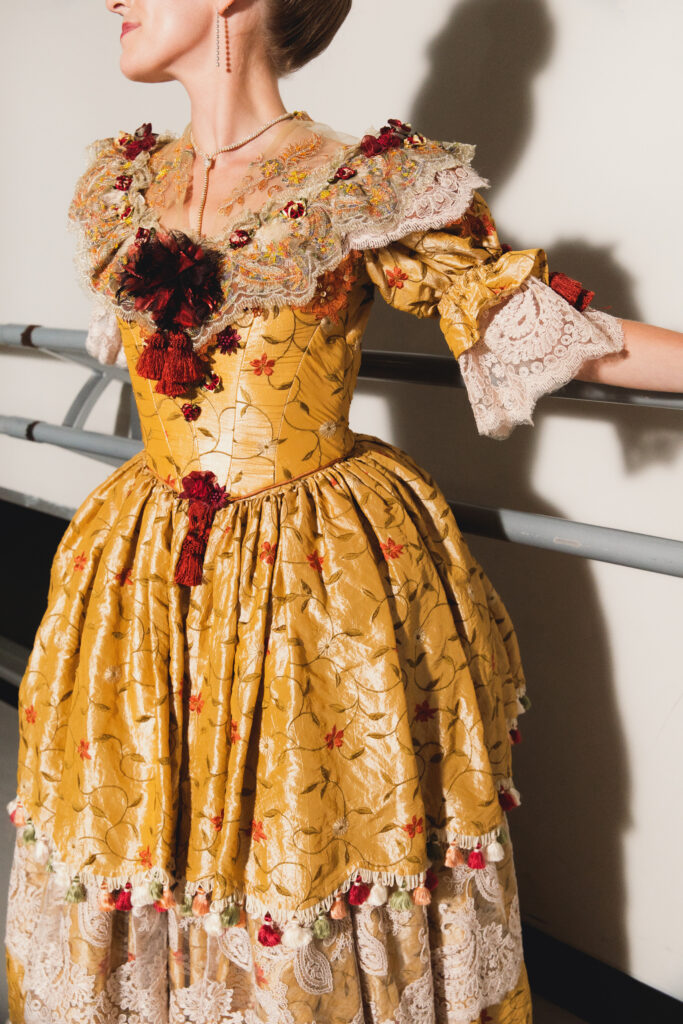
For the production of “Marie Antoinette: Vampire Queen of Versailles,” Mills told Mitchell he wanted a feminist, political story rather than a literal history, and the two arrived at a dress 10 feet across and five feet deep. “Now, that wouldn’t have been possible, of course, to navigate the court,” Mills said.
“But what that did was … in the beginning of the ballet, I wanted Marie to be like a bird in a cage.”
The costume work Mills said he was most personally involved in was “Light/The Holocaust & Humanity Project” with McCollum. The dancers move from fully clothed toward bare, underwear-like layers by the end — a transition he wanted to feel gradual and almost imperceptible, mirroring how the history of the Holocaust unfolded.
“The history of the Holocaust is the story of families that devolve into nothingness,” Mills said. Generating that sense for the audience, the slow realization of how something so devastating could happen almost without anyone noticing, was what mattered most to him.
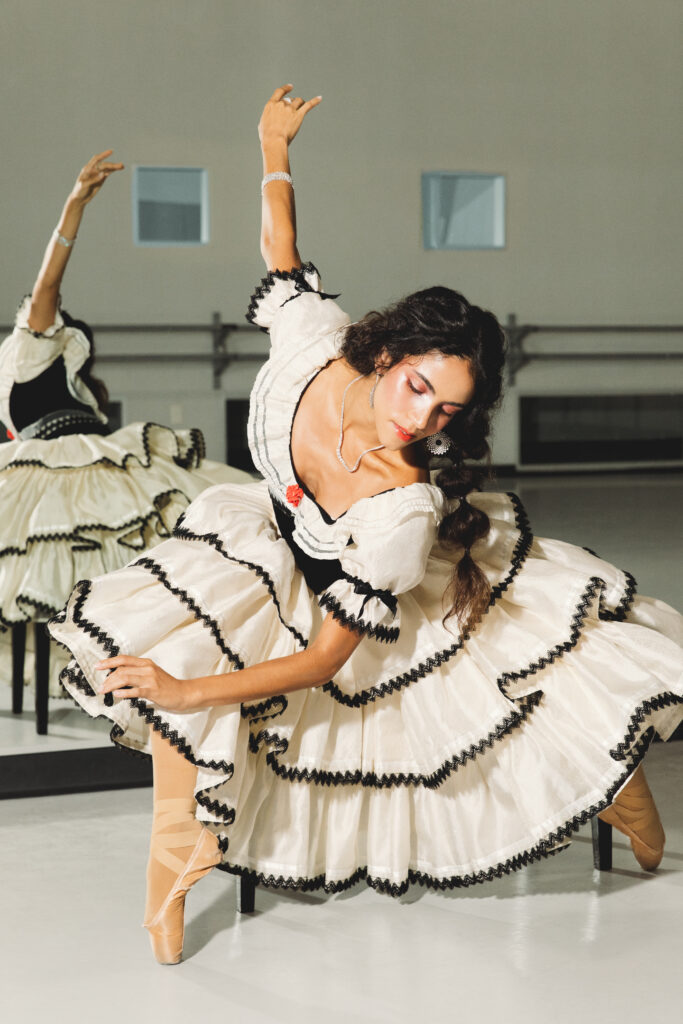
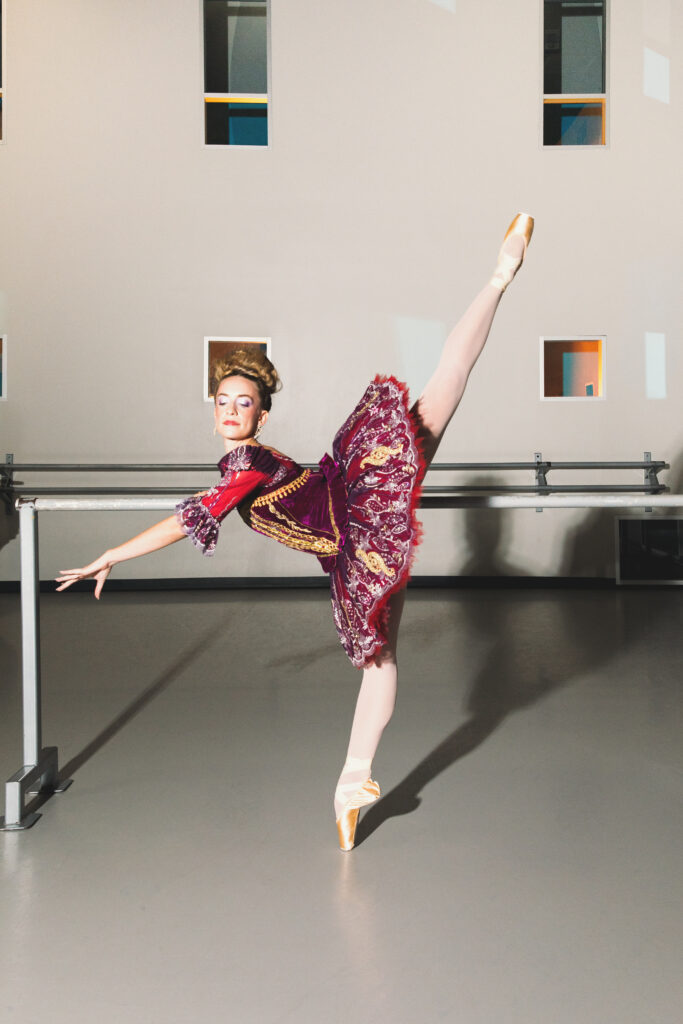
Costume also becomes something the dancer has to move with, not just wear.
Behind the costume
A Balanchine-style ballet performed in a leotard and tights is simply the dancer’s daily wear, Mills notes. But the second-act song in “The Nutcracker,” for example, the “Waltz of the Flowers,” calls for petals, a towering hairpiece and wings that a partner has to navigate around. “If the dancer is portraying a fairy, it’s important for her to have wings,” he says. “It definitely becomes an extension, something the dancer has to navigate.”
Ballet Austin’s wardrobe department repairs every costume before and after each run, which is how a 25-year-old “Hamlet” costume or the Sugar Plum Fairy’s tutu acquired in 2013 can still go onstage. For productions the company doesn’t own, like “Giselle,” returning next season after a 10-year hiatus, they sometimes rent decades-old costumes from other companies. “We have rented costumes and sets that are 50 years old, and the quality of the material is such that they still are very sturdy,” Mills says.
The 2026-27 season leans into that same idea of what’s hidden beneath the surface, from “Giselle’s” cemetery spirits to “A Midsummer Night’s Dream’s” fairy forest. Even the shoes make an argument: in Justin Peck’s “Partita,” paired with Mills’ own “CARBON53,” dancers wear sneakers instead of pointe shoes. “It automatically tells you something about the dance,” Mills says.
In the same instinct behind those discreet ribbons and embellishments tucked into the Sugar Plum Fairy costume, for Mills, the details nobody else notices are often the ones doing the most work. Whether the audience realizes it or not, costumes are among the many pieces that come together to convey the show’s message.
RELATED: 5 Can’t-Miss Theatre and Dance Productions to See in Austin This Season
This article is taken from TRIBEZA Magazine’s September/October 2026 issues. Read the full Arts & Entertainment issue.