
West Chelsea Contemporary’s “Monsters” Finds Beauty in the Strange
The gallery’s latest exhibition brings together five artists whose whimsical creatures explore grief, healing, family and imagination
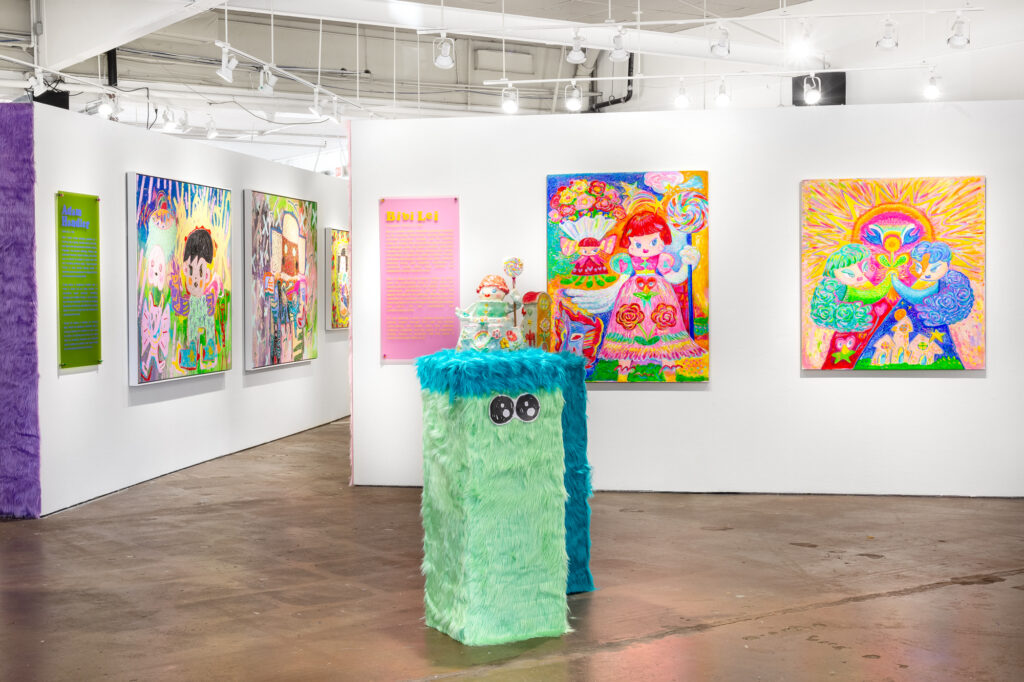
“My paintings have been with me for so long they’re like my best friends,” Adam Handler, one of five artists currently presenting in West Chelsea Contemporary’s “Monsters” exhibition, shares. “Sometimes I give up on them, but they never give up on me.”
Handler’s sentiments echo the surreal, surprisingly tender spirit of the west side gallery’s latest show.
“Monsters” features new pieces by Handler, Gabriela Noelle Gonzalez, Bibi Lei, Tony Pharo and Mr. B Baby, created specifically for the exhibition. Together, these internationally recognized artists reconsider “monsters” as mischievous co-conspirators, valiant protectors and loving guardians of the past.
SHOP


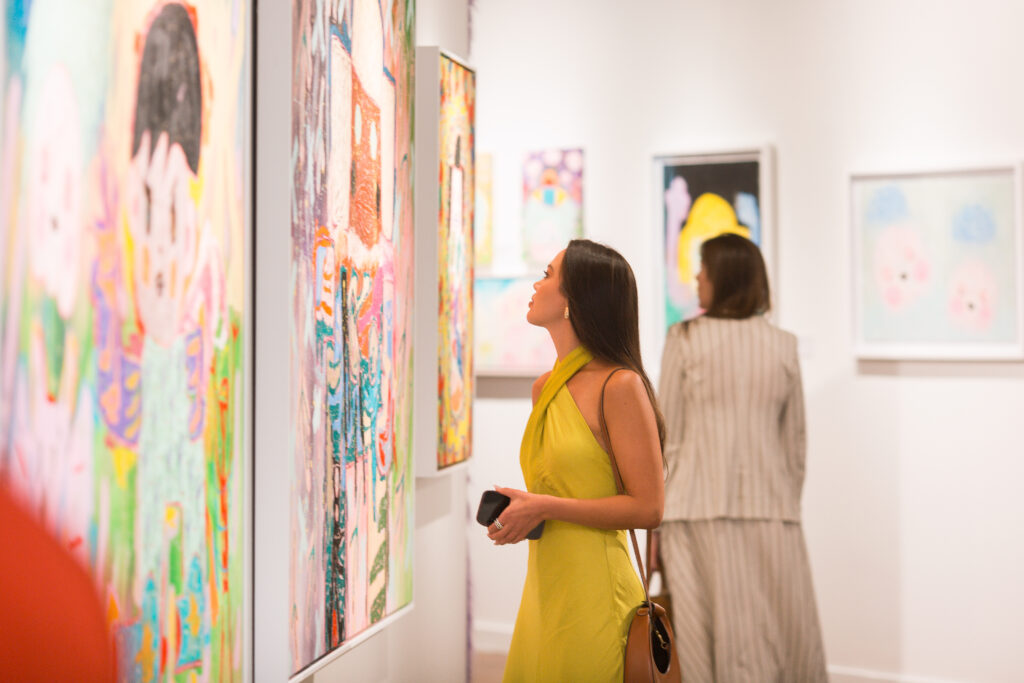
The world of “Monsters”
With “Monsters,” West Chelsea Contemporary swirls its patrons into a vibrantly imagined, candy-colored realm, one where fantastical creatures herald healing instead of harm. Stepping into the exhibit is like entering a wonderland labyrinth of five distinct, yet cohesive, dreamscapes.
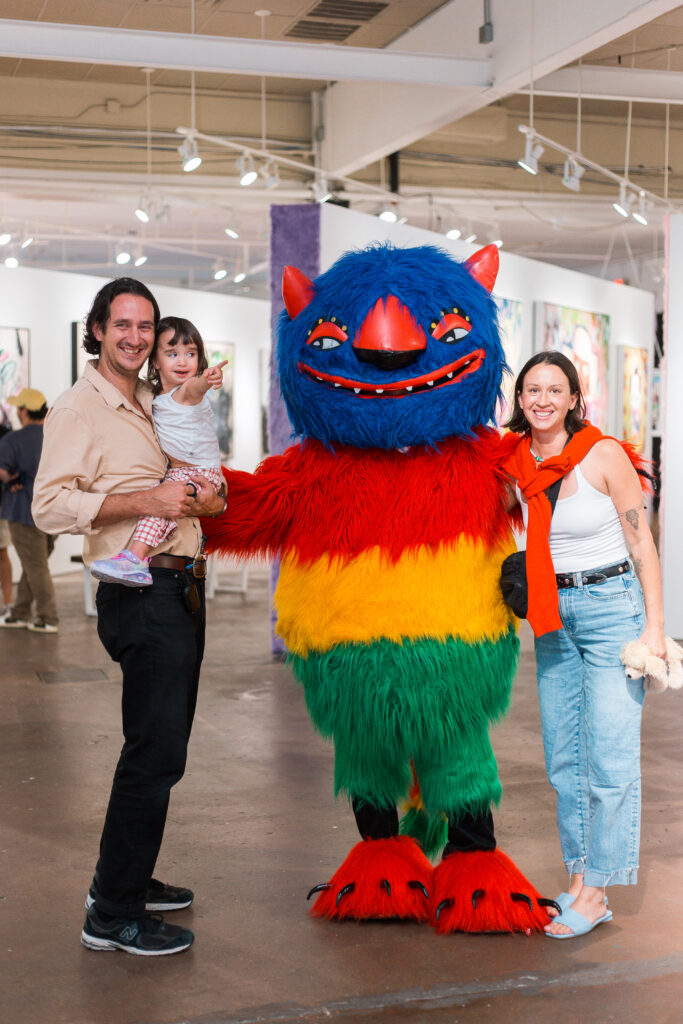
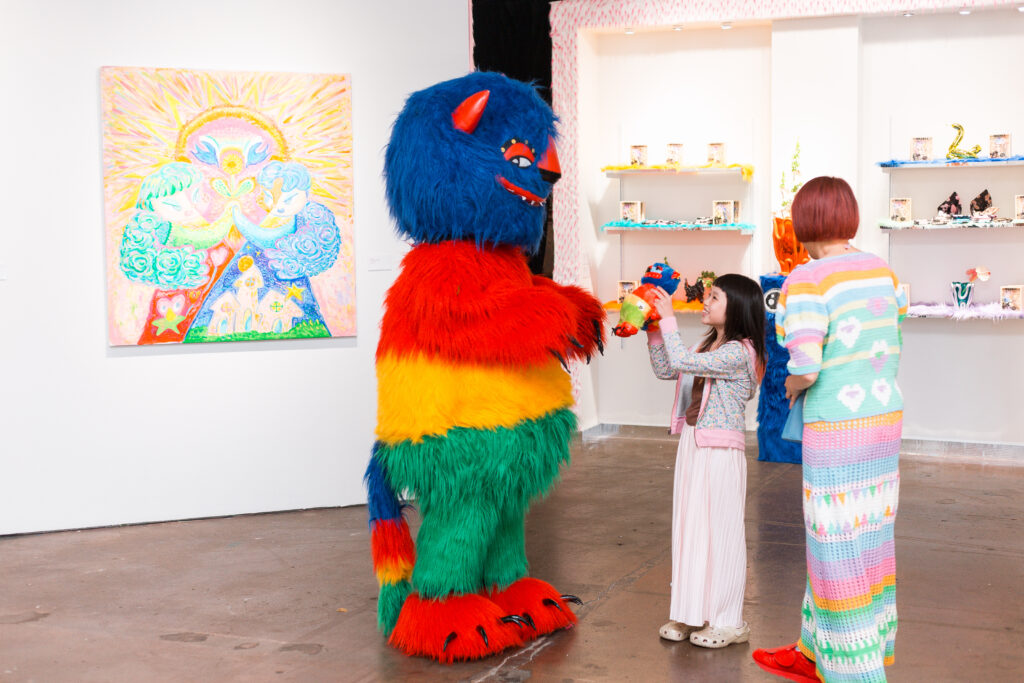
In the gallery’s sunlit space, bright fabrics adorn the edges of each artist’s display, invoking a fuzzy, Seussian hedge maze of cartoon fur. At one point during the exhibit’s opening reception, a life-size version of Mr. B Baby’s signature character, the piñata-inspired “Chucho,” wanders around, beguiling us with his impish grin and gentle giantdom. Every corner of “Monsters,” it seems, is an invitation to play.

Inner monsters, dynamic artists
While “Monsters”’s universe is visually consistent, artists bring their own intricately crafted characters to the exhibition.
Mr. B Baby’s characters, including Chucho, draw from the artist’s Mexican and Puerto Rican heritages. Her work merges folkloric figures with U.S-Mexico borderland cultural traditions in order to tell original tales of inner strength. Chucho, for example, finds resiliency in his broken-open piñata body. From Chucho’s wounds, Mr. B Baby sketches tepid blossoms and hopeful sprouts, which burst from him like sunflowers erupting from concrete.
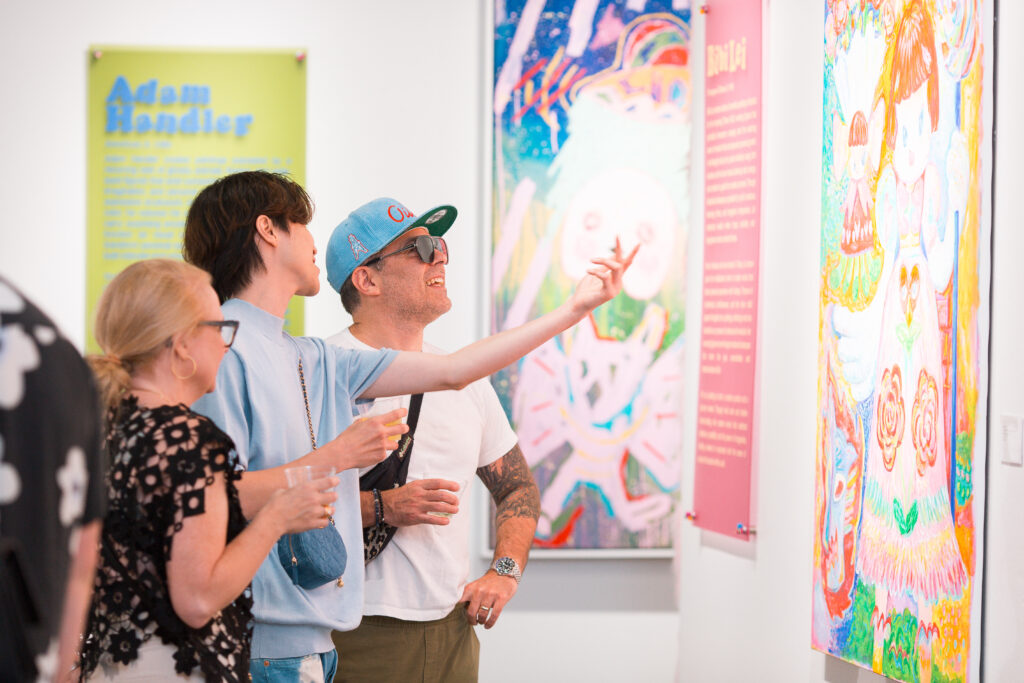
Bibi Lei’s red-haired “Brave Girls” embrace wild blossoms, too, with ferocious wonder. Lei — a Tokyo-based, self-taught painter — populates her whimsical canvases with rainbow fish, wide-eyed tulips and soaring, polychromatic doves. “My daughter is my muse,” Lei reflects, revealing that, after giving birth, she thought back to her own girlhood with her grandmother, a fellow painter, often. Painting is a way to connect with her grandmother, daughter and self in vivid technicolor.
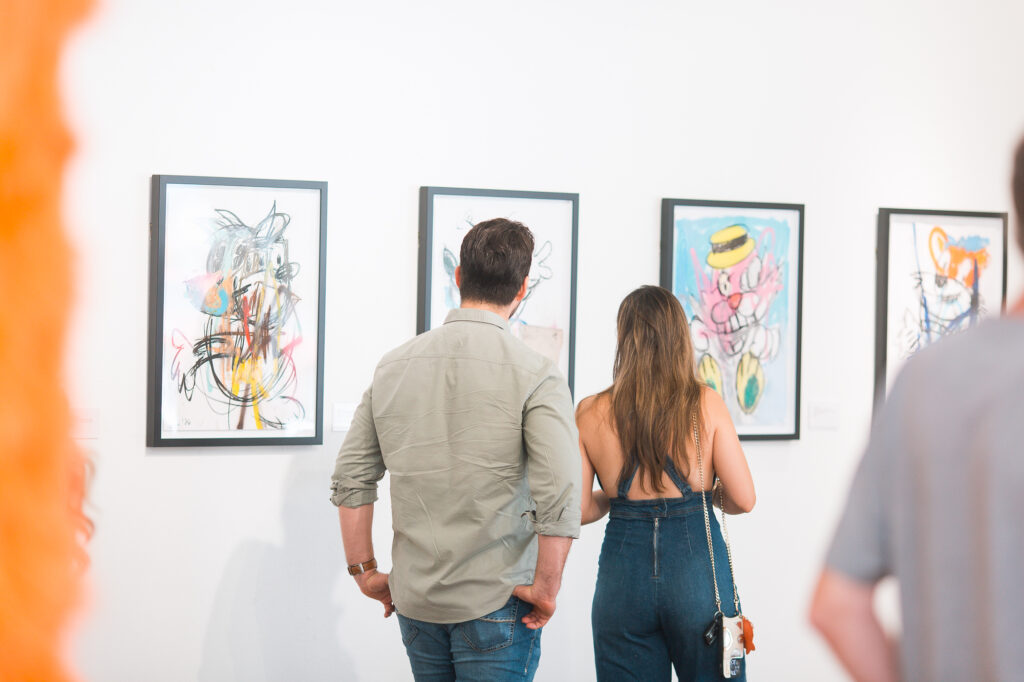
Tony Pharo also channels a younger self through his art. His paintings transfigure childhood icons, such as the Rugrats and Muppets, into abstract vessels for adult anxieties, as well as tributes to his grandmother. “I use (the characters) as placeholders,” Pharo offers, which allow him to “commemorate” her.
Adam Handler similarly uses his characters to navigate the loss of his grandmother. His recurring, marshmallow-hued ghosts serve as friendly lanterns, lighting a way through his grief. “I wanted to create a safe space for a relationship with death that felt almost welcoming, as a kind of walking side by side with it,” he observes. “I didn’t want it to be scary or create fear in people.”
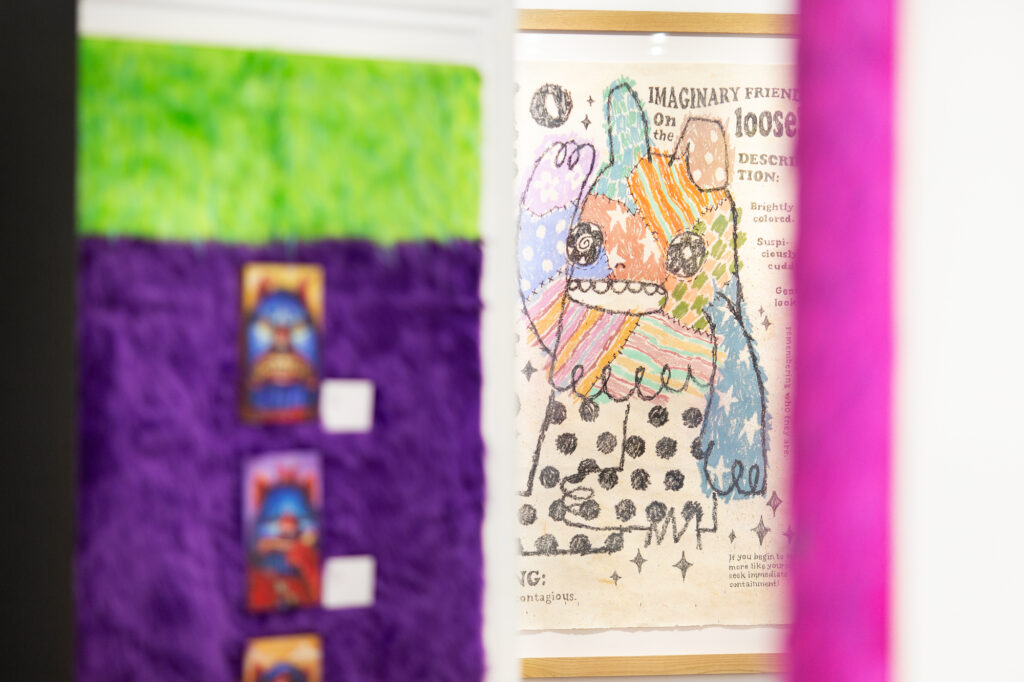
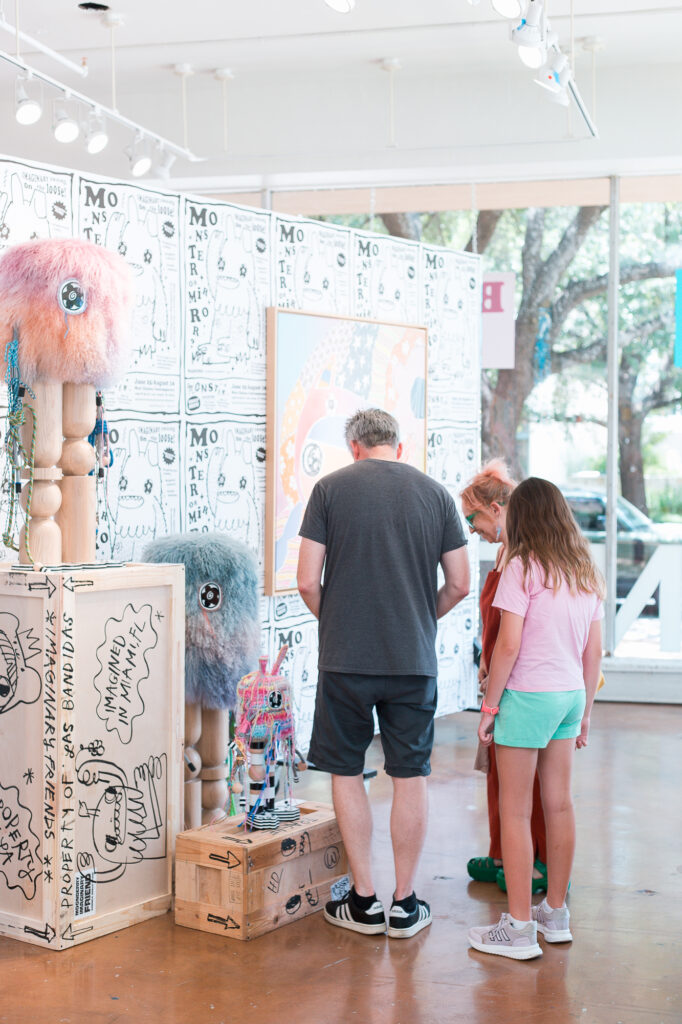
Gabriela Noelle Gonzalez’s interactive artworks orbit around three self-fashioned figures, each of which encourages viewers to celebrate their sensitivity. Her sprite-like “imaginary friend” sculptures protect “the inner child within,” she says, while her troupe of twelve bandidas source their “feminine” superpowers from their propensity for invention. Her porteros function as stewards of youthful imagination.
“If you have porteros in your home, they’re going to protect you,” Gonzalez offers. “And bandidas help you embrace courage and speaking up.” The latter are especially personal; as a child, Gonzalez was called bandida, which loosely translates to “rebellious girl.” Now, through her artwork, las bandidas aid her in embracing her softness and curiosity.
Befriending monsters on and off the canvas
“Monsters” may be fanciful, even childlike, but the exhibit’s themes are grounded in real stories of love and perseverance. Through their work, artists practice self-compassion and extend that care outward. They connect with family members — in Lei, Pharo and Handler’s cases, their beloved grandmothers — reaching across time to safeguard their memories.
Art is a portal: through it, we can touch our past selves, our loved ones and, if we dare, our innermost monsters. And, who knows — perhaps, like Handler, those monsters will turn out to be some of your dearest friends.