
David Douglass’ New Austin PBS Series Goes Deeper Than His TikTok Fame
Douglass built an online following with short-form videos about Austin food. Now he wants to tell bigger stories.
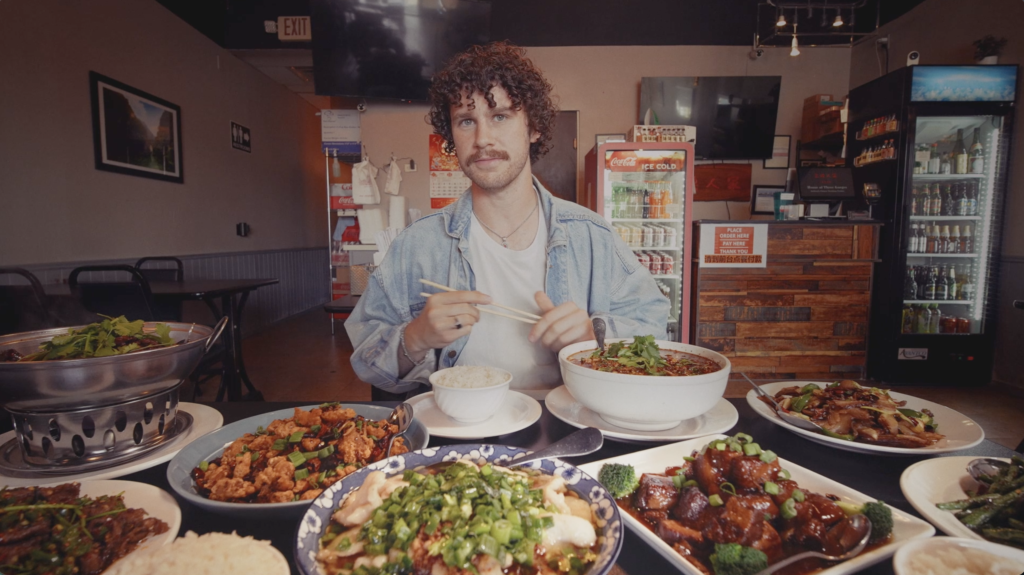
David Douglass became known for filming 45-second videos of himself eating food — but don’t call him an influencer. “I like writing about food, and the format I put that in is making videos and writing a script,” Douglass says. Now, he’s expanding his storytelling with a new Austin PBS docuseries, “David Eats Everywhere,” which highlights the stories of immigrant-owned kitchens in Austin.
Douglass doesn’t often reveal personal details on his account, so his followers may not know that his mother is from Baghdad and immigrated from Kuwait. He grew up in New Jersey in a food-centric family and says most weekends and holidays were spent cooking and eating all-day feasts with his Middle Eastern relatives. “That was the only activity on the docket,” he explains. “There were no board games happening, there were no discussions.”
Inspired by the “Drunk Tank” podcast, which made Austin sound like a great place to live, he moved to Texas in 2020 and began making videos online shortly after. Although no one watched at first, his account, @thedaviddouglass, started gaining traction in 2023. In 2025, he teamed up with director Ariel Quintans and producer Amanda Fox to apply for the Austin PBS Digital Originals grant that led to the creation of “David Eats Everywhere.”
SHOP


Behind the scenes of Austin’s kitchens
“Winning (the grant) was surreal and exciting, but it was also daunting,” Douglass says. “For someone who got pretty used to working by themselves, on their own time, it was definitely like, we gotta get down to business now.”
“David Eats Everywhere,” which premiered in June and is available on YouTube, explores a variety of restaurants and cuisines in Austin, from well-known award winners like Colombian coffee shop Desnudo to lesser-known food trucks like Uyghur skewer barbecue spot Camino Alamo. In a shift from his own videos, Douglass mostly steps back and lets the restaurateurs tell their stories.
The show delves into the effort and techniques that make the food interesting, like the secret to House of Three Gorges’ ultra-crispy Sichuan fried chicken, and provides a platform for restaurateurs to share their perspectives, like Comadre Panadería’s Mariela Camacho working to provide fair wages and vacation to her employees.

Why the stories matter
“I don’t feel the need to hit home the fact that they’re immigrants,” Douglass says. “There’s a lot of effort that goes into coming from another country, and you’re more likely to have an interesting recipe… These just genuinely are more interesting stories to me, and I think that comes through in the show.”
Douglass wants viewers to see the effort that the restaurant owners make — say, waking up before dawn to cook a lamb in an underground pit — so diners understand what they’re paying for. He also believes people are drawn to the stories of someone who sacrifices for something they believe in. “Everyone wants to be the person that’s willing to wake up at 4 a.m. for their dream,” Douglass says. “A lot of people are fascinated by that because they want to care about their own work that much.”
In that vein, Douglass does have some advice for people interested in following their dreams: Don’t start with the final product. Start with something achievable.
“People should think about the smallest thing they can make the following weekend that would put them a little bit closer to having their bigger goals realized,” he advises. “If you want to open a restaurant, make something for your friend this weekend. If you want to write a novel, write a short story that’s three pages long.”
So how does Douglass describe what he does these days? “It’s a crazy word to throw around, but if I keep making shows like this — filmmaker.”