
Austin’s Unity Tunnel Transforms a Lady Bird Lake Underpass Into a Community Mosaic
Designed by artist Reginald C. Adams, the new public art project celebrates the people, places and memories that make Austin special
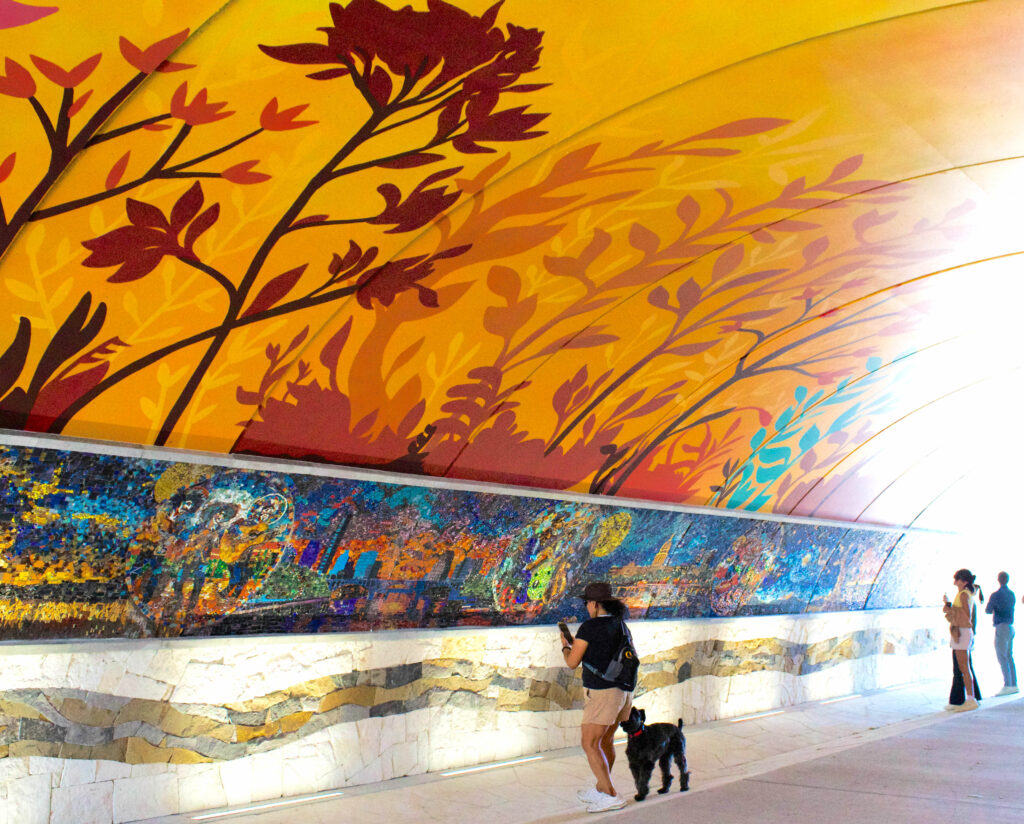
It all started with a simple question: “What makes Austin special to you?” With 250 responses, two years of planning, hundreds of artists and volunteers, three months of installation and 689,000 mosaic tiles, the Unity Tunnel was completed — a testament to the love and life of the Austin community.
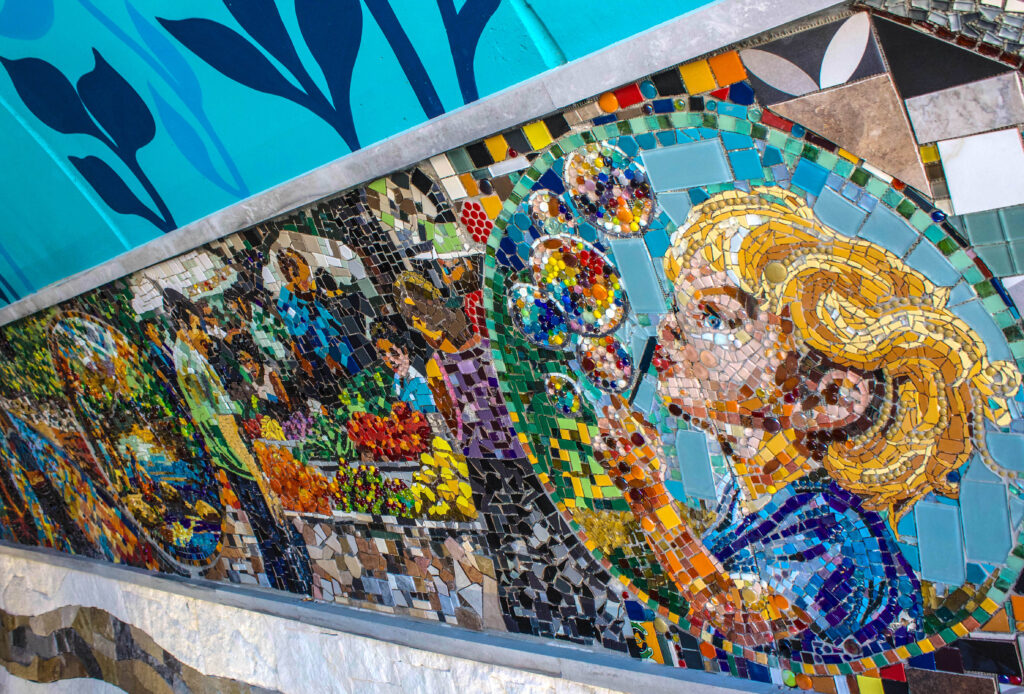
People jogging and biking along Lady Bird Lake pass beneath South Pleasant Valley Road at the Longhorn Dam Bridge, now officially known as the Unity Tunnel. Though it spans only 150 feet of trail, the underside of the bridge is a little world unto itself. Sweeping mosaics of multicolored tiles cover the walls, while the ceiling recedes into a painted mural. Kaleidoscopic scenes of Austin’s people, places, events and animals appear at every turn. According to Reginald C. Adams, the designer behind the project, the tunnel represents “the in-between” — the space between Earth and the cosmos that humanity fills.
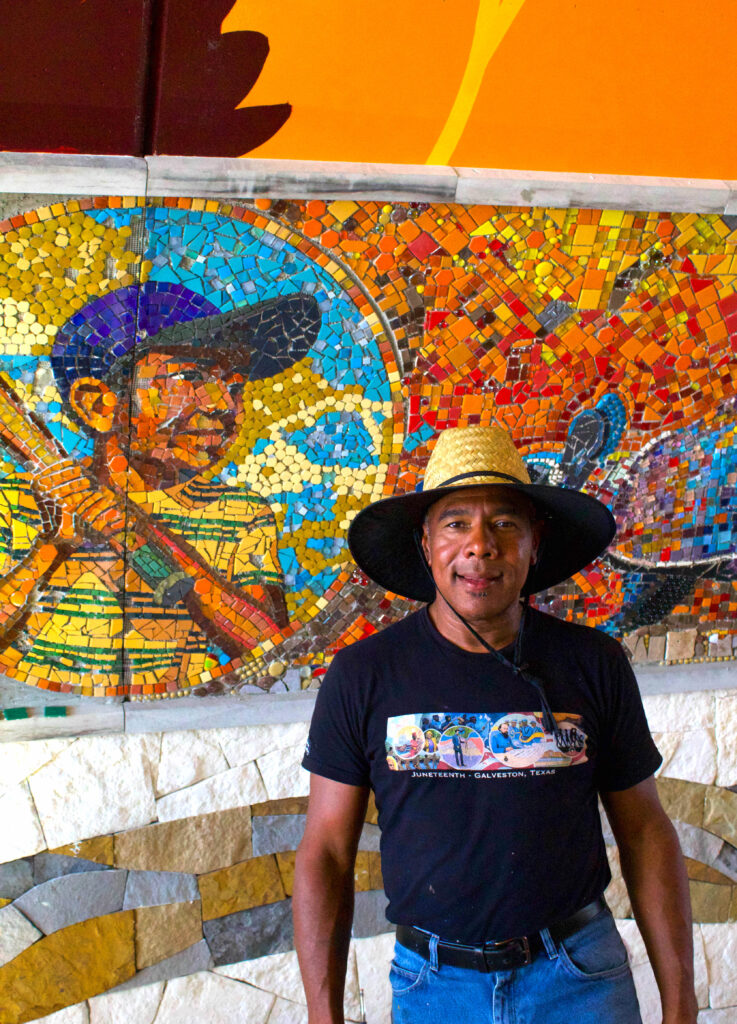
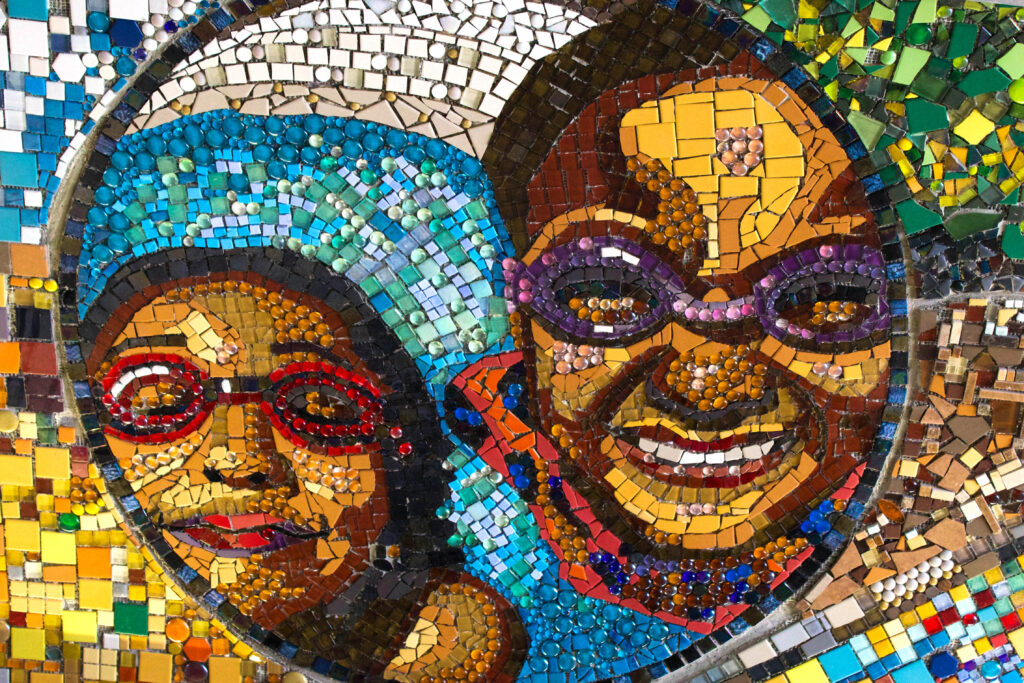
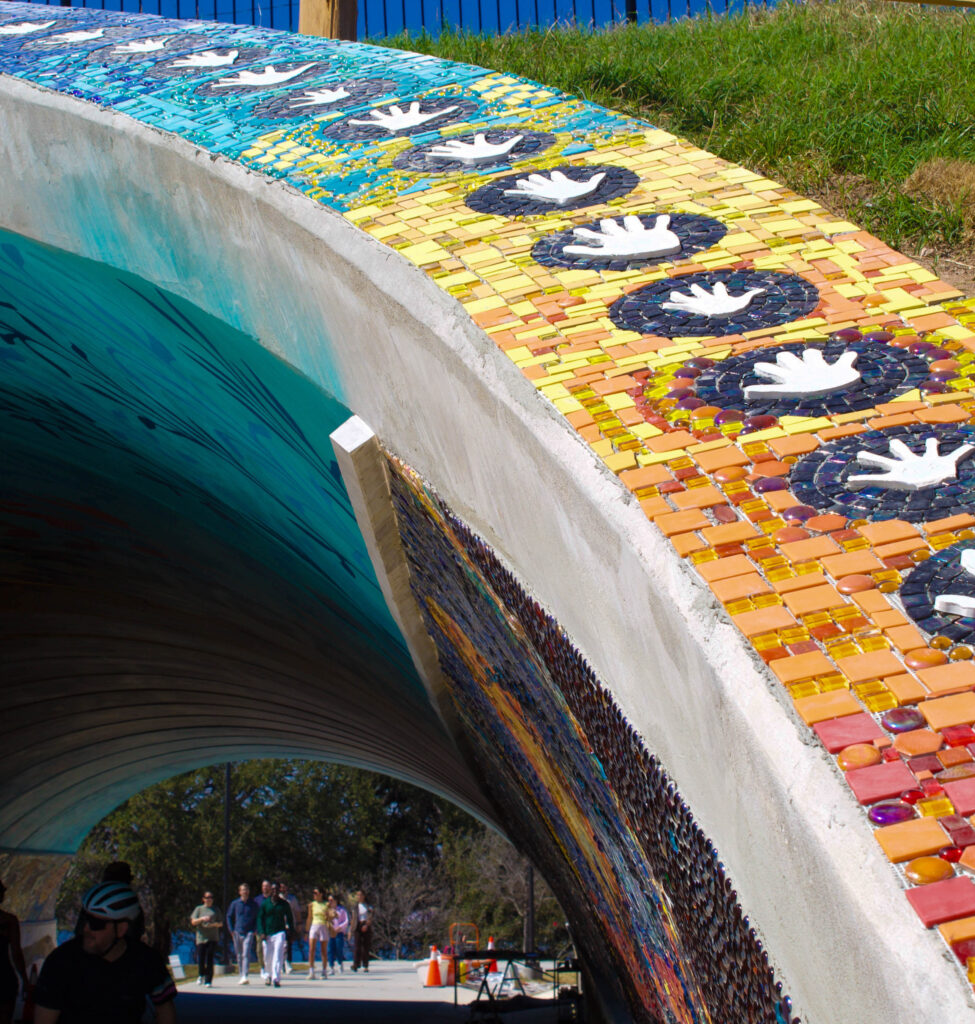
Adams, known for his community-focused murals that inhabit Texas cities including Houston, Galveston and Plano, received the commission nearly two years ago after the city passed on the initial artist who declined incorporating input from Austinites. Adams proved to be the ideal choice. “We put the ‘public’ in public art,” he says proudly. He doesn’t view his work as a means to draw attention to his individual vision, but rather to allow viewers to “see themselves.” As a result, every image reflects the memories and experiences that Austinites share. Even the 75 handprints framing the tunnel’s two entrances were contributed by local children, adults and a few pets.
Building art through community
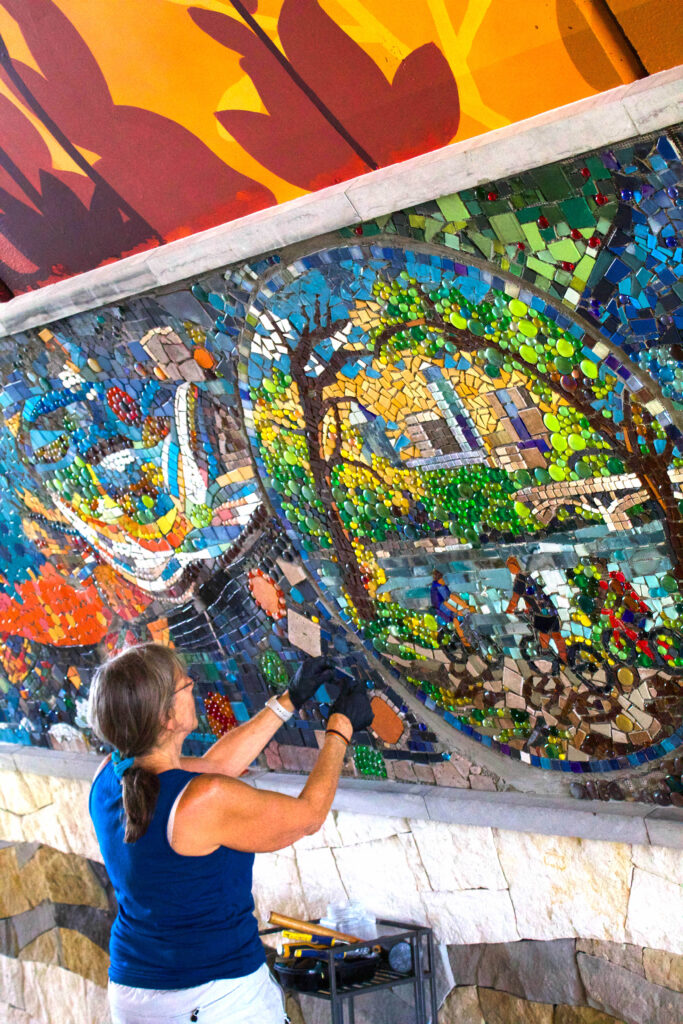
Diana Gale, a local artist and volunteer on the project, gingerly laid down a cerulean tile as one of the finishing touches on a scene depicting bikers riding along a wooded trail. Coincidentally, she first discovered the project while biking through the tunnel. “To be a part of something like this is very special,” she says. “And now when I ride through here, I can say, ‘I put down that tile right there.’”
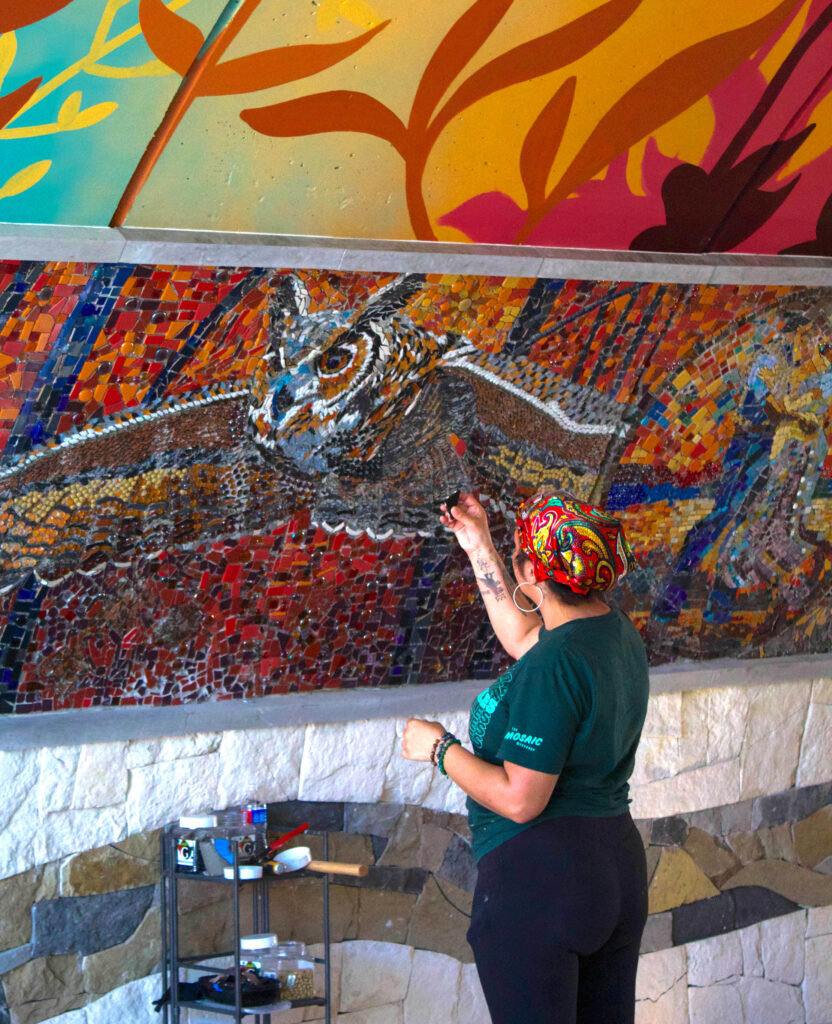
Across from Gale, artist Irene Valentin worked on a large-scale image of a great horned owl in flight. A member of Adams’ creative team for about three years, she contributed to the mural throughout the entire process. During the community workshop where locals added their handprints, Valentin says participants “exploded” with inspiration. “My favorite thing is to create with people,” she says. “Through art, I want to show people freedom.”
Earlier that week, Valentin saw a family enter the tunnel on a walk. The parents turned the artwork into a scavenger hunt. “Find the turtle,” or “find the kids playing,” the parents said as their children excitedly searched the walls. “They were creating their own traditions around it,” she said. “Every time they come through here, they’re going to remember those moments.”
Day to night influences
One side of the tunnel pays tribute to Austin by day, with imagery of children blowing bubbles, swimming or eating ice cream. The other pays homage to the city at night, with city lights, mariachi bands and couples dancing. “There’s something anyone can pick up on,” Adams says. Beyond depicting shared experiences, one of public art’s great strengths is its accessibility. “You don’t have to go to the museum. You don’t have to get dressed up. You don’t have to be academically or culturally astute to come and appreciate this.”
When asked how he began his vocation as an artist, Adams simply says, “I was a little boy who loved to draw. I just traded in my crayons for colored tiles.” Seeing the Unity Tunnel resonate with the people of Austin — many of whom stop to gaze intently or take photos — is an affirmation of his decision to live as an artist. “I don’t know a time in my life when I wasn’t doing what I’m doing now,” he says. “The stakes are just higher, and the messages become more important.”
Stronger together
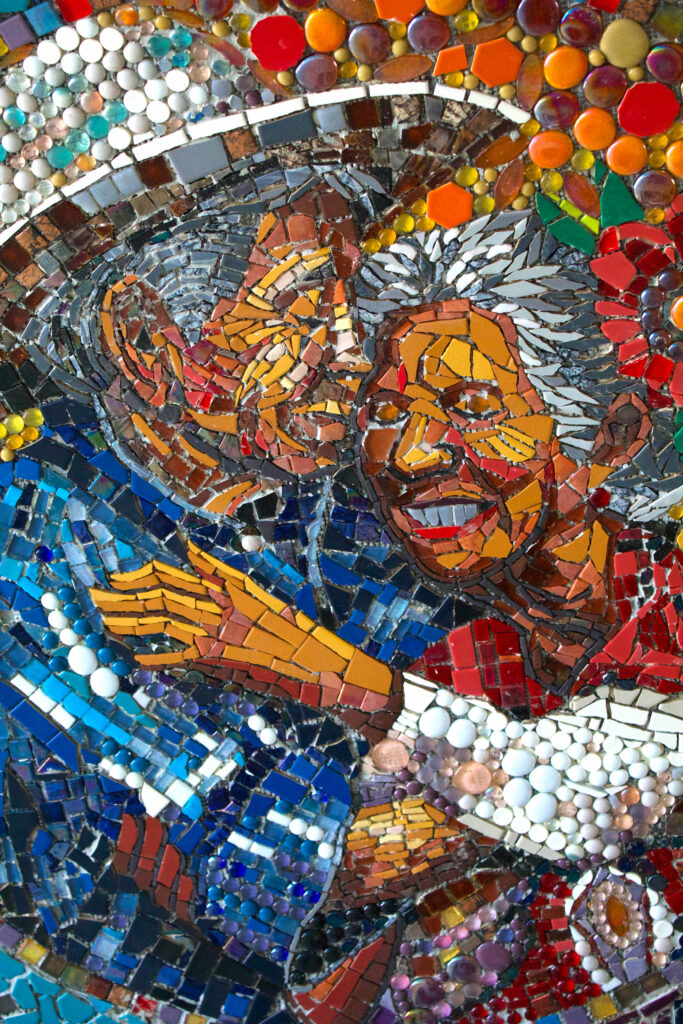
On a sunny Friday morning as the project neared completion, Adams walked under the tunnel, directing volunteers and speaking with visitors viewing the unfinished artwork. The back of his shirt read “Absolute Equality,” merchandise from a national initiative to commemorate Juneteenth through public art. The diversity of tiles — varying widely in shape, color and size — speaks to the diversity of the people of Austin. The name of the tunnel, Adams says, speaks for itself. “Just turn on the news.”
“There are a lot of times we want to say something. But we don’t know where to say it, without fear of retribution,” he says. “ I get to use public space to speak up. And what I felt needed to be said is that we are stronger together.”
RELATED: Affordable Art Fair Austin Returns This May With Works Starting at $100